
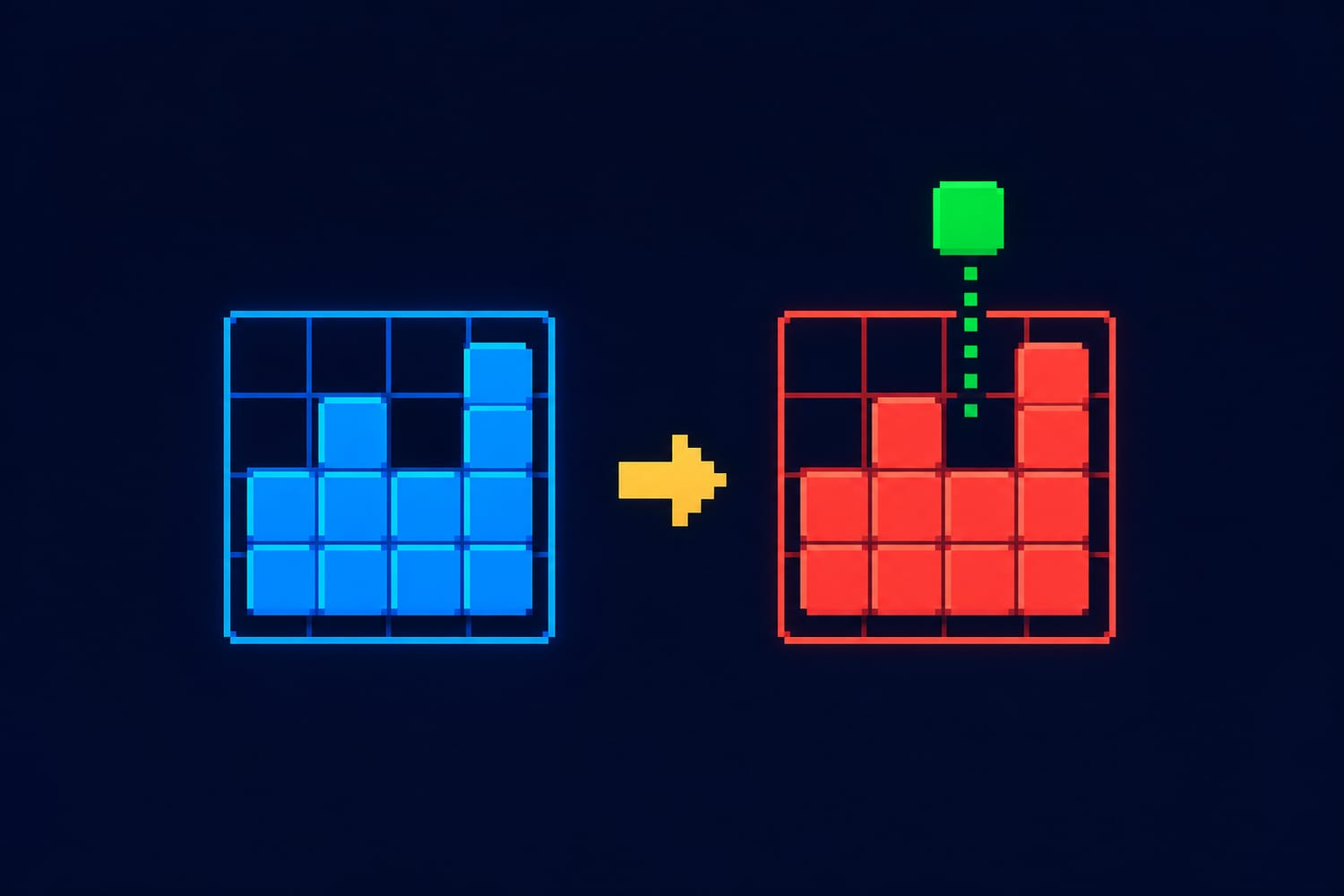
The Counterexample Test: How to Challenge a Puzzle Theory Before You Commit
What the Counterexample Test Is
The counterexample test is a simple way to challenge a puzzle theory before investing time or making a risky move. State what you think must be true, then actively search for one legal case in which it is false. If you find that case, revise the theory. If you do not, keep investigating—failure to find a counterexample is not automatically proof.
This approach replaces hopeful guessing with controlled skepticism. Instead of asking only, “Why might my idea work?” you ask the more revealing question: “What would prove me wrong?”
That small change can improve your decisions in Sudoku, logic grids, word puzzles, tile games, riddles, escape-room challenges, and many other puzzle types.
Why Good Theories Can Still Be Wrong
Puzzle solvers constantly form theories:
- “This square must contain a 7.”
- “The gardener must live in the blue house.”
- “The answer probably begins with S.”
- “That switch must open this door.”
- “These two jigsaw pieces belong together.”
- “The shortest-looking path must be the correct one.”
Forming theories is useful. Without them, you would have no direction. The danger appears when a promising theory quietly becomes an accepted fact.
A pattern may fit every clue you have examined while failing somewhere you have not looked. A word may match the definition but not the required tense. A Sudoku candidate may work in one row while creating a contradiction in another box. A tile move may clear space now but block an essential route later.
In formal mathematics, a counterexample is an example that meets a statement’s conditions but not its conclusion. As this Khan Academy introduction to counterexamples explains, a single valid counterexample can defeat a universal claim. Puzzle theories are often less formal, but the same principle applies: one legal alternative is enough to show that something is not yet forced.
The Five-Step Counterexample Test
Use this process whenever a theory would affect several later decisions, consume a limited attempt, or create a position that is difficult to undo.
1. State the Theory Precisely
A vague belief is difficult to test. Turn it into a clear statement.
Instead of:
“The triangle seems important.”
Write or think:
“The triangle symbol must represent the number 4.”
Instead of:
“Maya probably arrived first.”
Use:
“According to the clues, Maya must have arrived before every other person.”
Precise wording exposes hidden assumptions. Words such as must, always, only, never, and exactly create strong claims—and strong claims deserve strong testing.
This step pairs naturally with separating facts from assumptions during a puzzle solve. A printed clue is a fact. Your interpretation of its consequences may still be a theory.
2. List the Conditions That Must Remain True
A real counterexample must obey the puzzle’s rules. An illegal arrangement proves nothing.
Suppose you think a certain logic-grid pairing is forced. Any test arrangement must still satisfy:
- Every direct clue
- All “not” relationships
- Any ordering or adjacency rules
- The requirement that each item appears once
- Every deduction already established beyond doubt
This is where constraint mapping becomes valuable. When the constraints are visible, you can test alternatives without accidentally breaking an unrelated rule.
3. Negate the Theory
Now imagine that your theory is false.
If your claim is “Cell A must be 7,” test another remaining candidate in Cell A. If you believe “Lena sits beside Omar,” try placing them apart. If you think a puzzle answer starts with S, examine words with the correct length and crossings that begin differently.
Do not choose an alternative merely because it feels likely. Choose it because it directly challenges the claim.
4. Follow the Consequences
Carry the alternative forward carefully. Ask what else would have to change.
Your test may produce:
- A direct contradiction with a clue
- A duplicated number or object
- A required item with nowhere to go
- An impossible path
- A word that cannot satisfy its crossings
- A completely legal alternative arrangement
If the alternative creates a definite contradiction, it has failed. If it survives every relevant rule, you have found a counterexample—and the original theory was not forced.
5. Decide What the Result Means
There are three common outcomes:
A counterexample works.
Your theory is disproved or at least too strong.The alternative fails through a clear contradiction.
Your original theory gains support. If you have tested every possible alternative, it may now be proved.You cannot finish the test.
The theory remains unresolved. Mark it as tentative rather than committing.
This third result matters. “I could not disprove it” is different from “I proved it.”
A Worked Logic-Puzzle Example
Imagine a small scheduling puzzle with Ava, Ben, and Cara giving presentations on Monday, Tuesday, and Wednesday.
The clues say:
- Ava does not present on Monday.
- Ben presents before Cara.
You might quickly conclude:
“Ben must present on Monday.”
Now apply the counterexample test.
To challenge the theory, place Ben on Tuesday. Because Ben must be before Cara, Cara would then need Wednesday. That leaves Monday for Ava—but Ava cannot present Monday. The alternative creates a contradiction.
Could Ben present Wednesday? No, because he must present before Cara, and no later day remains.
Every alternative fails, so Ben really must present Monday. This is deduction, not guessing.
Now change the first clue to “Ava does not present on Wednesday.” Ben could be Monday with several possible completions, but he could also be Tuesday while Cara takes Wednesday and Ava takes Monday. That second legal schedule is a counterexample to “Ben must be Monday.”
Notice what the counterexample proves: Ben is not forced to Monday. It does not prove that Tuesday is the final answer. It simply keeps both possibilities open.
Where to Search for Counterexamples
Random testing can help, but targeted testing is faster. A useful Education Development Center guide to testing conjectures recommends examining cases between familiar examples, extreme cases, and unusual special cases. These are productive targets in puzzles too.
Boundary Cases
Test the ends of a range:
- The first and last positions in an ordering puzzle
- The corners and edges of a grid
- The shortest and longest possible words
- Nearly full or nearly empty areas of a board
Rules that appear reliable in the middle often behave differently at boundaries.
Repeated or Symmetrical Cases
Try duplicate letters, repeated numbers where permitted, mirrored shapes, equal distances, or interchangeable objects. Solvers frequently assume objects must be different even when no rule says so.
The Least Convenient Alternative
Do not test only the alternative that is easiest to imagine. Test the one that would be most damaging to your theory.
If you believe a path is safe, test the route that strains its narrowest point. If you think a word pattern is fixed, try the candidate with an unexpected repeated letter. If you believe an object belongs in one region, test the farthest legal region.
Chain-Reaction Cases
Some theories look safe locally but fail several steps later. Continue the test until the board stabilizes or produces a contradiction.
This is especially important in Sudoku, Sokoban-style box puzzles, sliding-tile games, and logic grids, where one choice can reduce options elsewhere.
Avoiding the Most Common Testing Mistakes
The counterexample test is powerful, but only when applied correctly.
Using an illegal example: A counterexample that violates a clue does not count. Check every condition, not just the convenient ones.
Stopping too early: An alternative may look strange without being impossible. Follow it until you find a specific broken rule.
Treating one failed alternative as proof: If a cell has three candidates and one fails, two still remain. Test the complete set before declaring a forced answer.
Changing several assumptions at once: If you test too many speculative ideas together, you may not know which one caused the contradiction. Change one important variable at a time.
Forgetting the original position: Experiments become risky when you cannot restore the board. Use pencil marks, screenshots, an undo function, or the techniques in the reversibility rule for testing puzzle moves.
When It Is Finally Safe to Commit
Commit when your theory has survived the right level of challenge—not merely when it feels convincing.
A move is usually safe when:
- It follows directly from a rule or confirmed clue.
- Every competing candidate creates a contradiction.
- The possibilities have been exhaustively checked.
- The move can be made without depending on an untested assumption.
In some puzzles, especially those with chance or hidden information, certainty may be impossible. The counterexample test still helps by distinguishing a calculated choice from a logical deduction.
The goal is not to distrust every idea forever. It is to challenge an idea before building half the solution on top of it. Strong solvers do not avoid theories; they pressure-test them. When a theory survives, they commit confidently. When it fails, they gain something equally valuable: a clearer understanding of the puzzle and a better direction for the next attempt.

