
Puzzle Breaks and Burnout: How Small, Finishable Challenges Can Restore a Sense of Progress
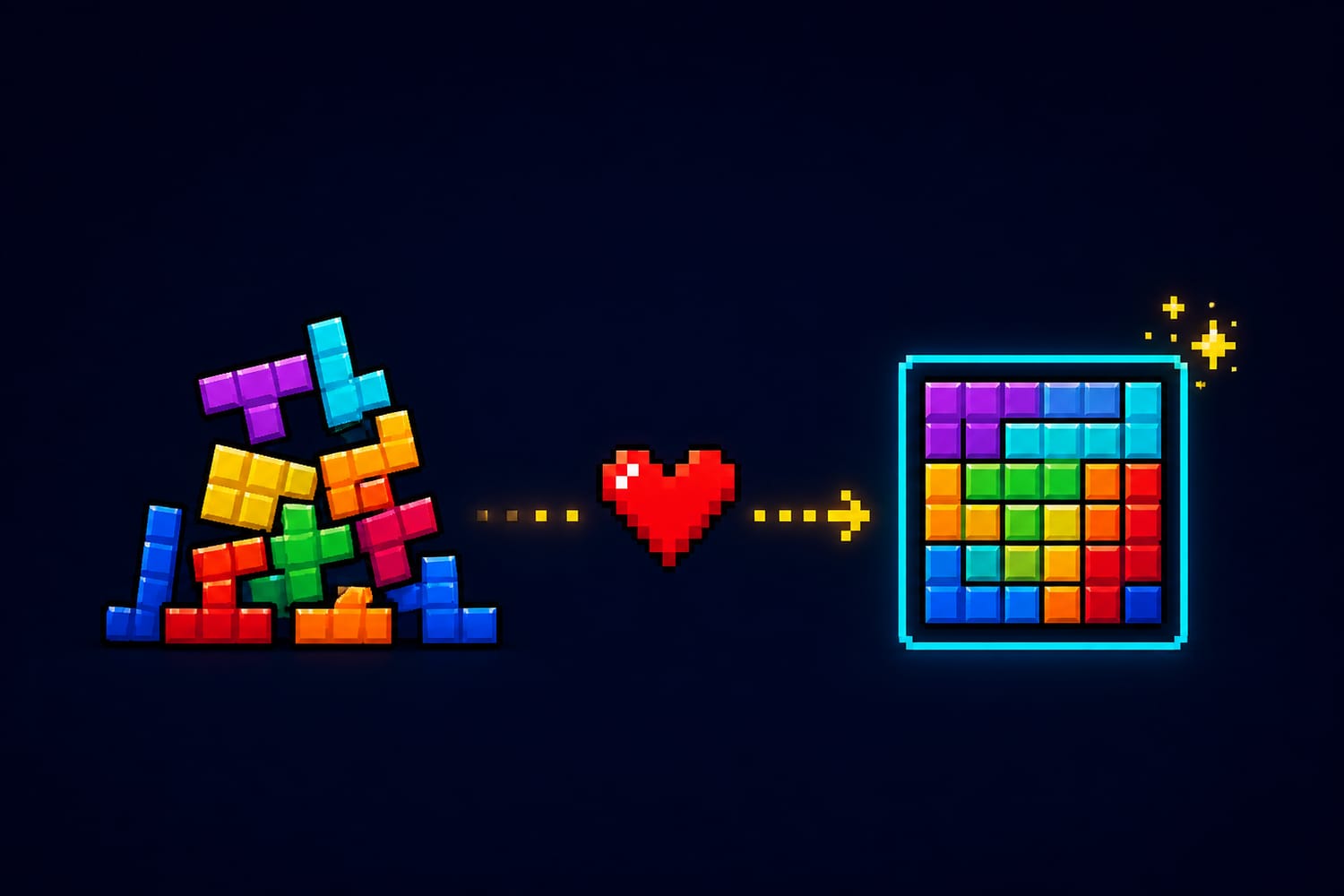
A short, manageable puzzle cannot cure burnout, but it can offer something an overwhelmed mind often lacks: a clear goal, visible progress and a satisfying finish. By shifting attention to a low-stakes challenge for a few minutes, puzzle play can create a useful pause and remind us what forward movement feels like.
Why Burnout Can Make Progress Feel Invisible
When demands continue piling up, effort and achievement can become strangely disconnected. You answer messages, attend classes, complete household tasks or work through a packed schedule, yet still end the day feeling as though nothing is truly finished.
Burnout has a specific meaning. The World Health Organization describes burnout as an occupational phenomenon resulting from chronic workplace stress that has not been successfully managed. Its features include exhaustion, growing mental distance or cynicism toward work, and reduced professional effectiveness. It is not classified as a medical condition, and the WHO applies the term specifically to work.
People also use “burned out” more casually to describe exhaustion from school, caregiving, household responsibilities or a generally overloaded life. Whatever the setting, prolonged strain can make large responsibilities appear endless. There is always another email, assignment, appointment or decision waiting.
A finishable puzzle offers the opposite experience. It has boundaries. You can see the grid, pieces, clues or board. The rules remain stable, and there is usually a recognizable ending. For a mind surrounded by open-ended obligations, that small amount of certainty can feel refreshing.
Why Small Wins Matter
Research into everyday motivation suggests that meaningful progress can have a powerful effect on how people feel about their work. Teresa Amabile and Steven Kramer’s discussion of the power of small wins explains how forward movement—even when modest—can support motivation and a more positive inner work life.
Puzzles compress this progress into a small space. Consider what happens during a five-minute word search:
- You begin with an incomplete challenge.
- You locate one word.
- That success reduces what remains.
- You identify another useful pattern.
- The page gradually changes from unfinished to finished.
The same sequence appears in Sudoku, crosswords, matching games and jigsaws. Every correct placement changes the problem. Progress is not abstract; it is visible on the screen or page.
That experience does not erase the difficult task waiting after the break. Instead, it provides a quick reminder that action can produce change. When everything else feels stuck, one completed challenge becomes concrete evidence that you can still observe, decide and move forward.
What Makes a Puzzle Break Restorative?
Not every distraction is a good break. Endless scrolling, for example, has no natural stopping point. One post leads to another, and a five-minute pause can quietly become half an hour.
A useful puzzle break has several different qualities.
A Clear Beginning and Ending
A single mini crossword, one Sudoku section, a short maze or one level of a block game provides a defined target. You know when you have completed it—or when your break time has ended.
Active but Different Attention
A puzzle still asks you to think, but usually in a way that differs from the work causing strain. Someone writing a report might enjoy a visual matching game. A student solving equations might prefer a word puzzle. A person making decisions all morning may find a simple jigsaw more comfortable than another strategy-heavy task.
Immediate Feedback
Puzzles continuously show what is working. A piece fits, a row becomes complete or a correct word reveals new letters. This feedback makes effort easier to recognize.
Low Stakes
Most casual puzzles allow mistakes without serious consequences. You can erase an answer, move a piece or try again. That creates room to experiment without worrying that one imperfect move will ruin the day.
Enough Challenge to Hold Attention
A puzzle should be interesting enough to interrupt work-related thoughts, but not so difficult that it becomes a new source of frustration. The ideal break puzzle is often easier than the one you would choose for an evening challenge.
Research on workday micro-breaks is encouraging but should not be exaggerated. A systematic review and meta-analysis published in PLOS ONE found that breaks of ten minutes or less were associated with greater vigor and less fatigue. The findings for performance were less conclusive, meaning a short break may help you feel better without guaranteeing an immediate productivity increase.
Choosing the Right Puzzle for the Moment
The best puzzle depends on what your mind needs. Before opening a game, ask: Do I need calm, stimulation, confidence or variety?
- For a quick win: Try a short word search, easy maze or small matching challenge.
- For quiet focus: Choose a jigsaw, untimed Sudoku or familiar solitaire game.
- For a change of mental scenery: Switch from words to shapes, numbers to colors, or screen-based work to a paper puzzle.
- For social energy: Solve a riddle with a friend or complete a shared crossword clue.
- For gentle confidence: Select a puzzle slightly below your normal difficulty.
- For renewed curiosity: Try a new puzzle format, but only when learning new rules feels enjoyable rather than tiring.
The Puzzles Arcade games collection includes word, number, matching, card and block-based options, making it easier to choose a challenge that fits your available time and energy.
A Simple Seven-Minute Puzzle Reset
A good puzzle break needs a boundary so that it remains restorative rather than becoming avoidance. Try this seven-minute routine:
- Pause for 30 seconds. Move away from the current task, release your shoulders and take a few unhurried breaths.
- Choose one puzzle. Avoid browsing through dozens of options. The choice itself should be easy.
- Set a five-minute timer. If the puzzle is completed sooner, enjoy the finish rather than immediately starting another.
- Focus on one goal. Find five words, complete one corner, clear one level or solve one clue group.
- Stop when the timer sounds. Record where you stopped if you want to return later.
- Notice the progress. Take a moment to recognize what changed during the break.
- Choose one next action. Return to your main responsibility with a specific step, such as opening a document, writing one sentence or answering one message.
That final step is important. It connects the small success inside the puzzle to a manageable action outside it.
How Puzzle Thinking Can Help After the Break
A puzzle break becomes especially useful when its structure inspires your next move. Instead of returning to a large task as one intimidating object, treat it as a puzzle with smaller sections.
Ask yourself:
- What information do I already have?
- What is the smallest useful step?
- Which part is easiest to complete first?
- What can I eliminate or postpone?
- Am I treating an assumption as a fact?
- Would a hint, question or second opinion help?
This resembles the process used to divide an overwhelming puzzle into solvable pieces. A crossword becomes easier when crossing letters accumulate, while a jigsaw becomes manageable when pieces are sorted into edges, colors and recognizable objects.
Everyday responsibilities can often be approached similarly. “Prepare the presentation” becomes “write three section headings.” “Clean the kitchen” becomes “clear one counter.” “Study science” becomes “review the first five terms.”
The puzzle does not complete these tasks for you. It demonstrates a process: reduce the field, make one move and use the result to decide what comes next.
When a Puzzle Break Stops Being a Break
Puzzle play is most helpful when it remains voluntary, limited and enjoyable. It may be time to choose a different kind of break if you notice that you are:
- Becoming more frustrated than refreshed
- Chasing scores or streaks out of obligation
- Ignoring hunger, thirst, movement or sleep
- Using puzzles repeatedly to avoid an urgent responsibility
- Turning every break into another competition
- Feeling unable to stop when the planned time ends
In these situations, try walking, stretching, drinking water, looking outdoors, talking to someone or resting without entertainment. Different forms of strain require different kinds of recovery.
A Helpful Tool, Not a Cure for Burnout
Puzzle breaks should never be presented as a complete solution to burnout. Chronic workplace stress may require meaningful changes such as a manageable workload, clearer expectations, stronger support, adequate time away from work or professional care.
If exhaustion, low mood, anxiety, sleep problems or difficulty functioning are persistent or severe, speak with a qualified healthcare or mental health professional. A puzzle can provide a pleasant pause, but it cannot replace treatment, rest or necessary changes to an unhealthy environment.
What puzzles can offer is smaller and still valuable: a contained moment in which progress becomes visible again. The confidence loop created by solving puzzles begins when you face uncertainty, take an action, learn from the result and adjust.
On difficult days, completing one grid or placing one final piece will not solve everything. But it may restore a useful thought: I do not need to finish every challenge right now. I only need to find the next workable move.

