
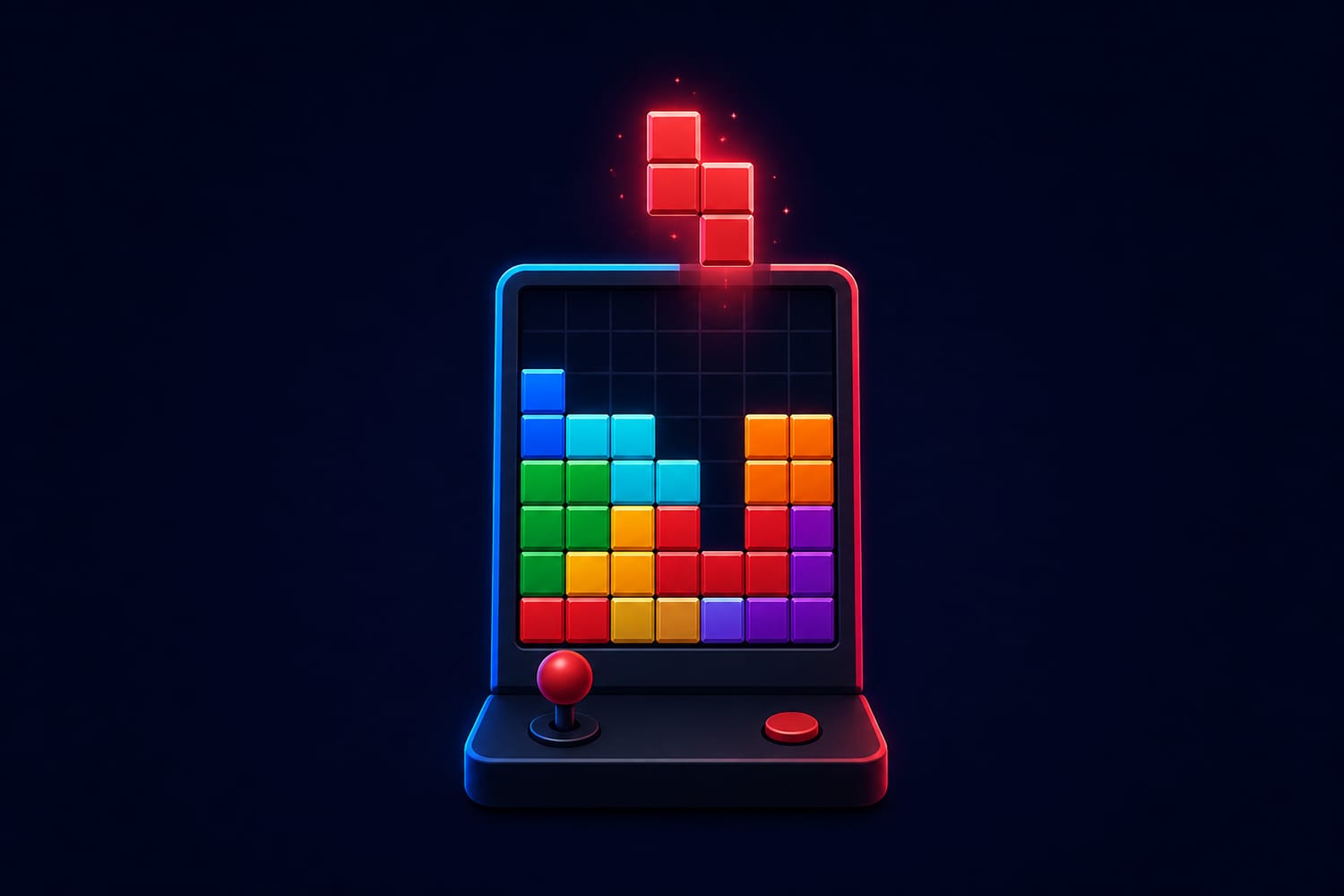
Why Unfinished Puzzles Stay in Your Head: The Design of the “One More Try” Effect
Why “One More Try” Feels So Powerful
An unfinished puzzle can stay in your thoughts because your goal is still active, the solution feels reachable, and every attempt provides new information. Well-designed puzzle games strengthen this pull with clear feedback, visible progress, fair difficulty, and quick restarts—turning “I failed” into “I know what to try next.”
The familiar “one more try” feeling is not a single scientific effect or a mysterious trick hidden in the code. It is usually the result of several psychological and design principles working together. The puzzle creates an open question, shows that progress is possible, and makes returning almost effortless.
Understanding these principles reveals why a stubborn Sudoku square, nearly completed word, or badly placed block can follow you long after you put the game down.
The Mental Pull of an Unfinished Goal
The most famous explanation is the Zeigarnik effect, named after psychologist Bluma Zeigarnik. It is commonly described as a tendency to remember unfinished or interrupted tasks better than completed ones.
The reality is more complicated—and more interesting. A 2025 meta-analysis of interruption, recall, and task resumption found no reliable overall memory advantage for unfinished tasks. However, it did find a general tendency for people to resume interrupted tasks. In other words, an unfinished activity may not always be remembered better, but it can still create a powerful urge to continue.
A puzzle is especially good at keeping a goal active because its unfinished state is easy to recognize. The missing piece, locked door, incomplete row, or unsolved clue remains visible. Your mind does not have to wonder whether the task is complete; the gap announces itself.
This creates a kind of mental open loop:
- You form a clear goal.
- You begin working toward it.
- Something interrupts completion.
- The goal remains relevant because no ending has been reached.
- Your mind continues considering possible next steps.
That is why a possible answer can suddenly appear while you are walking, eating, or getting ready for bed. You are not necessarily thinking about the puzzle constantly. Instead, related ideas may remain accessible enough to reappear when a new connection occurs.
Progress Changes Failure Into Information
Not every unfinished puzzle makes us want to continue. If the rules are confusing or success seems impossible, stopping feels sensible. The strongest “one more try” moments happen when failure also reveals useful information.
Consider a word puzzle. Your latest guess may be wrong, but it could confirm three letters and eliminate several possibilities. In a block puzzle, a failed arrangement may reveal that one piece must be saved for a narrow space. In a maze, a dead end removes one route from consideration.
Each attempt shrinks the problem.
Research using Wordle illustrates this effect. A 2024 study found that feedback suggesting players were approaching the answer increased motivation and positive feelings compared with feedback that made progress seem blocked. Near-misses were also more arousing than other outcomes, although their emotional effect depended on whether players interpreted them as progress or as being thwarted.
This distinction matters. Being one letter away can feel exciting when it opens a path forward. Repeatedly seeing the same four correct letters without learning anything new can feel irritating. A near-miss is motivating when it says, “You are closer, and here is why.”
The Puzzle Must Feel Difficult—but Possible
Puzzle designers often aim for a narrow space between boredom and discouragement. If every solution is obvious, there is little reason to concentrate. If every challenge feels hopeless, there is little reason to continue.
This balance is often discussed through flow theory. Flow describes a highly focused, absorbing experience in which a person becomes deeply involved in an activity. Research has connected flow with several conditions, including meaningful challenge, clear goals, a sense of control, and a reasonable relationship between the player’s skills and the task’s demands.
A good difficulty curve therefore behaves less like a vertical cliff and more like a staircase. Early puzzles introduce the rules. Later puzzles combine those rules, add restrictions, or require more planning. The player’s skill rises alongside the challenge.
Puzzles Arcade’s look at how great games teach without explaining explores how designers introduce one idea at a time before testing it in more surprising ways. That preparation helps a difficult puzzle feel demanding rather than unfair.
When players understand the rules and trust the design, they can think, “There must be a solution.” That belief is essential. It turns the next attempt into a reasonable experiment instead of a blind gamble.
Fast Restarts Keep the Thought Alive
Motivation can disappear during a long wait. Puzzle games protect it by reducing the distance between failure and another attempt.
An effective retry loop often looks like this:
- The player makes a move.
- The game responds immediately.
- The player understands what happened.
- Undo or restart is instantly available.
- A new attempt begins while the idea is still fresh.
This loop is powerful because the cost of experimentation is low. If resetting takes one second, players can test a theory without worrying about losing ten minutes of progress. An undo button can make experimentation even safer by allowing one questionable move to be reversed.
Quick recovery does more than save time. It changes how failure feels. Instead of being a final judgment, failure becomes part of the conversation between the player and the game.
Clear visual and audio feedback also helps. A tile may snap into place, a number may flash red, or a completed row may disappear with a satisfying sound. These responses explain cause and effect without requiring a lengthy message.
Small Goals Make the Finish Line Look Closer
Large puzzles can feel overwhelming, so many games divide them into smaller milestones. A crossword offers individual clues. A jigsaw puzzle contains recognizable areas. A match game may track separate colors or objectives. A logic puzzle gradually fills its grid.
These mini-goals provide frequent evidence of progress. Even when the entire puzzle is unfinished, the player can see that several parts are complete.
Designers may use:
- Progress bars or completion percentages
- Clearly defined stages
- Counters showing remaining targets
- Checkmarks for solved objectives
- New areas that open after milestones
- Visual changes that make the board look increasingly complete
The closer a player appears to be to a goal, the more attractive another attempt may become. However, accurate feedback is important. If a game claims the player is “almost there” when success is actually far away, trust can quickly disappear.
A strong puzzle does not merely promise progress. It lets the player understand what has improved.
Fairness Creates the Confidence to Continue
Players are more willing to retry when they believe their choices matter. They need confidence that the game follows consistent rules, provides enough information, and does not punish reasonable experimentation too harshly.
That sense of fairness is rarely accidental. During development, designers observe where players hesitate, restart, misunderstand rules, or abandon a level. As described in Puzzles Arcade’s guide to puzzle playtesting, they may then reorder levels, clarify clues, improve feedback, or add safer ways to recover from mistakes.
Good puzzles create productive uncertainty. You may not know the answer, but you understand the question. Bad uncertainty leaves you wondering what the game expects, whether an object works consistently, or whether you have already entered an unwinnable state.
The difference can be summarized simply:
- Healthy challenge: “I do not know the solution yet.”
- Unfair confusion: “I do not know what the game wants from me.”
Only the first naturally encourages another thoughtful attempt.
Hints Can Preserve Momentum Without Removing Discovery
Sometimes the “one more try” loop begins to weaken. The player has repeated the same ideas, stopped making progress, and started clicking randomly. A well-timed hint can restore momentum—but only if it leaves something meaningful to solve.
Many games use staged hints. The first draws attention to an overlooked area. The second explains a relationship. A later hint suggests a specific action. This gives players control over how much assistance they receive.
The hidden systems behind smart puzzle hints may consider long pauses, repeated moves, frequent resets, or a lack of meaningful progress. No single action proves that someone is stuck, so thoughtful systems combine signals and offer help rather than forcing it.
The Best “One More Try” Is an Invitation
The “one more try” effect works best when it respects the player. Clear goals, fair rules, useful feedback, visible progress, and easy restarts can make persistence enjoyable. They support curiosity rather than simply demanding more time.
Responsible design also makes stopping easy. It avoids disguising endless repetition as meaningful progress, and it does not need aggressive pressure to hold attention. The puzzle itself should supply the reason to return: an idea to test, a pattern almost understood, or an answer that feels tantalizingly close.
That is the real secret behind an unfinished puzzle’s staying power. It leaves behind more than an incomplete board. It leaves behind a question—and few things are harder for a curious mind to ignore.

