
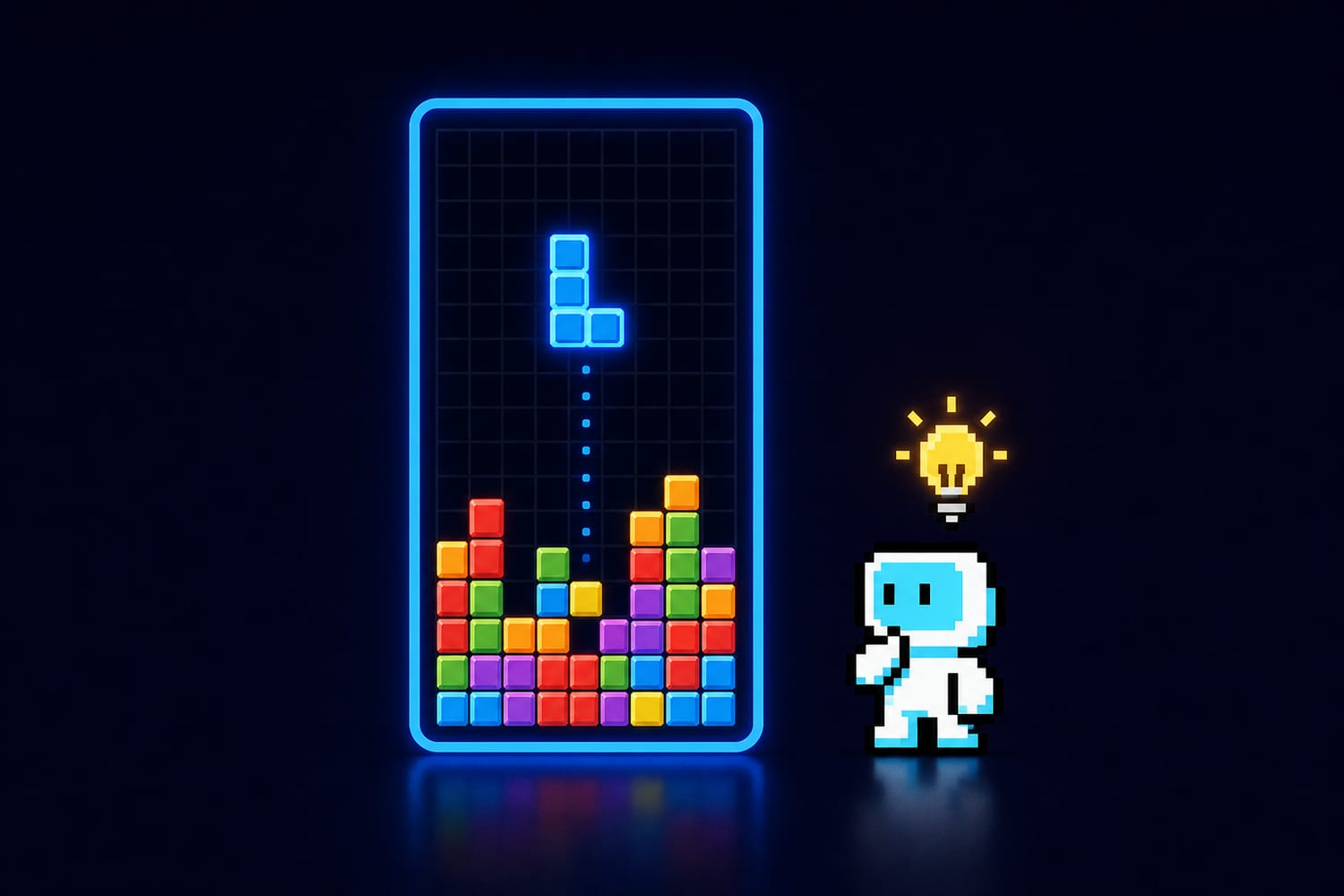
The Invisible Tutorial: How Great Puzzle Games Teach Without Explaining
The Invisible Tutorial: Learning Without Noticing
Some of the best puzzle games in the world have a strange magic trick: they teach you how to play without making you feel like you are being taught.
There may be no long manual, no pop-up window full of instructions, and no character stopping the action to explain every button. Instead, the game places a simple problem in front of you and lets curiosity do the rest. You try something. It works—or it does not. You adjust. You understand. Before long, you are solving puzzles that would have seemed impossible a few minutes earlier.
This is the “invisible tutorial”: a design approach where the game teaches through play. Rather than separating learning from fun, it makes learning part of the fun.
Great puzzle games are especially good at this because puzzles are already about discovery. A puzzle asks, “What happens if…?” The invisible tutorial simply guides that question in a careful, thoughtful way. It gives players enough information to begin, enough freedom to experiment, and enough feedback to learn from the results.
Why Puzzle Games Need Good Teaching
Puzzle games are built on rules. Sometimes the rules are obvious: match three colored gems, fit falling blocks into rows, push boxes onto targets. Sometimes they are unusual: rewind time, split yourself into copies, change the meaning of words, rotate gravity, or fold space.
No matter how simple or strange the idea is, players must understand the rules before they can enjoy solving challenges. If a game explains too much at once, players may feel overwhelmed. If it explains too little, they may feel lost. The best puzzle games find a middle path: they introduce rules one at a time and let players prove their understanding by using them.
This is why early levels in many puzzle games are not just “easy levels.” They are lessons in disguise. The first level may teach movement. The second may teach interaction. The third may introduce a hazard. The fourth may combine those ideas in a slightly new way.
A well-designed puzzle game does not simply ask, “Can you solve this?” It asks, “Have I prepared you to solve this?”
The Power of Showing Instead of Telling
One of the strongest tools in invisible tutorial design is visual clarity. A puzzle game can teach a lot through what the player sees.
Imagine a locked door and a key placed nearby. The game may not need to say, “Pick up the key to open the door.” The shape, position, and familiar meaning of those objects do the teaching. If the player collects the key and the door opens, the lesson is complete.
This “show, don’t tell” approach works because humans are excellent pattern finders. We naturally connect cause and effect. If stepping on a button opens a gate, we understand the relationship. If moving off the button closes the gate, we learn something more specific: the button must stay pressed.
Good puzzle games make these relationships visible. They use clear animations, sound effects, colors, and level layouts to help players notice what matters. A switch might glow when activated. A path might light up. A block might make a satisfying click when placed correctly. These details are not just decoration; they are communication.
The player is constantly asking, “What changed?” The game answers through feedback.
Safe Spaces for Experimentation
An invisible tutorial works best when players feel safe to try things. If every mistake is heavily punished, players become cautious. They stop experimenting and start worrying. Puzzle games usually avoid this by making failure low-cost.
Many puzzle games let players restart instantly, undo moves, or test ideas without losing much progress. This is important because learning often comes from being wrong. When a player pushes a block into a corner and realizes it cannot be moved out, they learn about the limits of the game’s rules. If restarting is quick, the mistake feels like part of the process instead of a punishment.
This is one reason undo buttons are so valuable in puzzle design. Games such as Sokoban-style block pushers, logic puzzles, and many modern puzzle apps benefit from allowing players to rewind or reset. The player can think boldly because the game says, in effect, “Go ahead. Try it.”
Safe experimentation also helps younger players and beginners. They may not know the “correct” approach yet, but they can learn by playing. The invisible tutorial respects their curiosity.
One New Idea at a Time
Many great puzzle games are built like a staircase. Each step is small enough to climb, but after many steps, the player has reached an impressive height.
This is often called a learning curve. In strong puzzle design, new ideas are introduced gradually. A game may first show a mechanic in its simplest form, then test it, then twist it, then combine it with something else.
For example, a puzzle game about lasers might follow this sequence:
- A laser points at a target.
- A mirror reflects the laser.
- The player must rotate the mirror.
- Multiple mirrors are introduced.
- Obstacles block the laser.
- The player must use mirrors and obstacles together.
- Later puzzles combine lasers with switches, doors, or moving platforms.
Each stage builds on the previous one. The player is rarely asked to understand everything at once. Instead, the game creates a chain of small discoveries.
This method keeps puzzles fair. A hard puzzle can still be enjoyable if the player has been taught the tools needed to solve it. Difficulty should come from clever combinations, not from unclear rules.
The First Puzzle Is Usually a Sentence
In puzzle game design, level layout is a kind of language. The designer “writes” with walls, blocks, paths, hazards, colors, and goals. The player “reads” the space by moving through it.
A first puzzle is often like a simple sentence: “Push the block onto the button.” Later puzzles become more complex sentences: “Use one block to hold the door open while another redirects the path.” Eventually, the game may create entire paragraphs of logic.
The invisible tutorial depends on this language being readable. Designers often use careful placement to direct attention. If the only object in a room is a lever, most players will pull it. If a newly introduced item is placed directly on the path forward, players are likely to interact with it. If a dangerous tile is placed where it can be observed before it must be crossed, players can learn safely.
This is not accidental. Level designers think carefully about what players will notice first, where they are likely to move, and how they will interpret the scene. A good tutorial level is not just easy; it is arranged to encourage the right discovery.
Feedback: The Game’s Quiet Conversation
Every puzzle game has a conversation with the player. The player makes a move, and the game responds. That response is feedback.
Feedback can be visual, such as a door opening. It can be audio, such as a chime when a piece fits. It can be physical, such as a controller vibration or a tile snapping into place. In digital puzzle games, strong feedback helps players understand cause and effect instantly.
Good feedback answers three questions:
- Did my action do something?
- What exactly changed?
- Was that change helpful, harmful, or neutral?
Without feedback, players may not know whether they are progressing. A switch that silently affects something off-screen can be confusing unless the game shows the result. A puzzle may become frustrating not because it is too difficult, but because the player cannot tell what their actions mean.
Many classic arcade and puzzle games use feedback brilliantly. Tetris, for example, immediately shows the result of every rotation, drop, and completed line. Matching games often use bright effects and sounds to confirm successful matches. These responses make the rules feel understandable and satisfying.
Teaching Through Surprise
Invisible tutorials are not only about making things simple. They also prepare players for surprise.
A great puzzle game often teaches a rule, lets players become comfortable with it, and then reveals an unexpected use for that rule. This creates the wonderful “aha!” moment that puzzle fans love.
For example, a player might learn that boxes block lasers. Later, they discover that blocking a laser is not always a problem—it can be the solution. Or they might learn that a character can rewind time, then realize they must use rewinding not to correct a mistake, but to create a sequence of actions that could not happen normally.
These surprises work because they are fair. The game is not changing the rules without warning. It is asking the player to look at familiar rules from a new angle.
This is one of the deepest pleasures of puzzle design: the moment when the player says, “Wait… can I do that?” and then discovers that yes, they can.
Why Players Enjoy Figuring Things Out
Invisible tutorials work because they trust the player. They do not assume the player needs every answer immediately. Instead, they create conditions where the player can discover answers personally.
That personal discovery matters. Being told a solution is very different from finding it yourself. When a player figures out a rule through observation and experimentation, they feel ownership of that knowledge. The game becomes more memorable because the understanding was earned.
This is also why puzzle games appeal to such a wide audience. They do not always depend on fast reflexes or deep gaming experience. Many puzzle games are about patience, observation, and logic. A child, a parent, a grandparent, or a lifelong gamer can all enjoy the same feeling of discovery.
Of course, different players learn at different speeds. Good invisible tutorials allow room for that. They may include optional hints, gentle reminders, or simpler early challenges. The goal is not to hide information unfairly; it is to reveal information at the right moment.
When Invisible Tutorials Go Wrong
Not every quiet tutorial succeeds. If a game is too unclear, players may not realize what they are supposed to learn. If important objects blend into the background, players may miss them. If two new mechanics appear at the same time, players may not know which one matters. If feedback is weak, players may solve something by accident without understanding why.
A puzzle game can also become frustrating when it relies on hidden information rather than logical discovery. For example, if the only way to solve a puzzle is to click on an object that looks unimportant, the challenge may feel unfair. Strong puzzle design should reward thinking, not random guessing.
The invisible tutorial is not an excuse to provide no guidance. It is a way of providing guidance through design instead of interruption.
The best games are generous with clarity. They respect the player’s intelligence while still giving them the tools they need.
The Designer Behind the Curtain
Behind every effortless puzzle is a great deal of effort. Designers test levels, watch players, adjust layouts, change colors, simplify rules, and remove confusion. Often, if a tutorial feels invisible, it is because the designer worked hard to make it that way.
Playtesting is especially important. A designer may think a puzzle is clear because they already know the answer. But a new player sees it with fresh eyes. By watching where players hesitate, what they misunderstand, and what they try first, designers can improve the tutorial without adding a wall of text.
Sometimes the smallest change can make a puzzle easier to understand: moving a button closer to a door, adding a line of sight to the goal, changing an object’s color, or placing a safe example before a dangerous one.
The invisible tutorial is like good stage magic. The audience sees something smooth and natural. The work behind it remains hidden.
The Joy of Being Gently Led
Great puzzle games do not simply give players challenges. They guide players into becoming better thinkers inside the game’s world.
They begin with simple lessons, offer clear feedback, encourage experimentation, and build complexity step by step. They teach through layout, sound, motion, and consequence. Most importantly, they let players experience the joy of discovery.
The next time you start a puzzle game and immediately understand what to do, pause for a moment and appreciate the craft behind that feeling. Somewhere, a designer arranged that first room, placed that first object, tuned that first sound, and shaped that first tiny moment of understanding.
The tutorial may be invisible, but its effect is everywhere.

