
Can Puzzle Games Ease Pain? How Focused Play May Help Manage Discomfort
The Short Answer: Focused Play May Reduce Pain Awareness
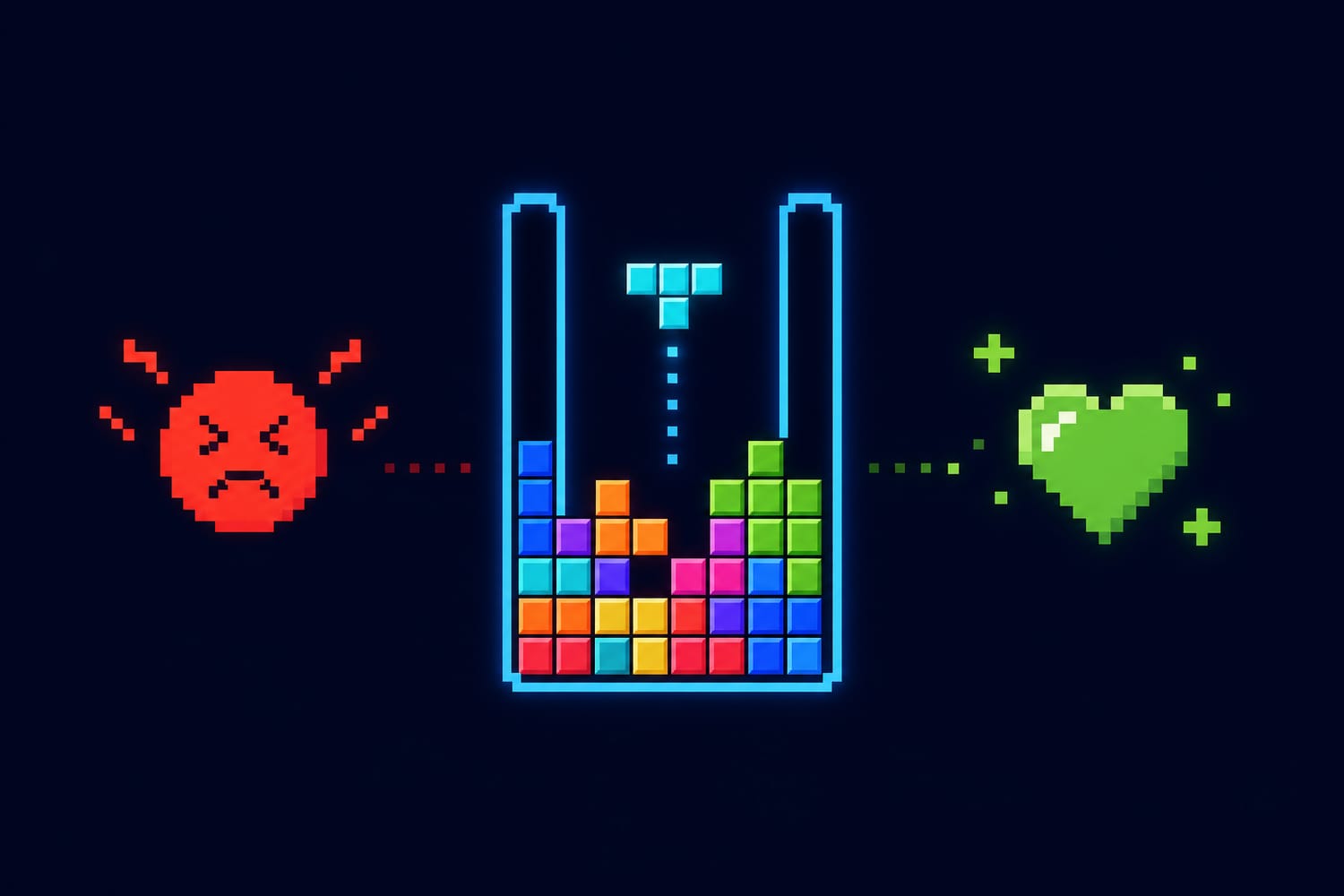
Puzzle games may temporarily ease discomfort by capturing attention, reducing stress, and giving the mind a manageable goal. Research supports distraction as a useful pain-management technique, especially during short-term or medical-procedure-related pain. However, puzzles do not treat the underlying cause of pain and should complement—not replace—appropriate medical care.
Pain Is More Than a Simple Alarm
Pain begins as a protective signal, but the experience is shaped by more than what is happening in a muscle, joint, nerve, or other tissue. Attention, emotions, stress, expectations, sleep, and previous experiences can all influence how strongly pain is felt.
This does not mean pain is imaginary. It means that pain is a real experience produced through communication between the body, nervous system, and brain. That communication is flexible enough to be influenced by what a person is thinking, feeling, and doing.
Consider how a minor scrape may barely register during an exciting activity but begin to throb once everything becomes quiet. The injury has not suddenly appeared; instead, more attention is now available for the discomfort.
Researchers describe distraction as a competition for attention. Pain naturally demands notice, but an engaging activity also requires mental resources. When the activity holds enough of those resources, pain may become less prominent for a while. This attention-based explanation is discussed in a scientific review of distraction in pain management.
Why Puzzle Games Are Promising Distractions
Not every distraction is equally absorbing. A puzzle asks the player to participate actively by recognizing patterns, remembering rules, testing possibilities, and making decisions. That involvement may give puzzles an advantage over passive entertainment.
Depending on the game, a player might need to:
- Search for a hidden word or object
- Hold possible answers in working memory
- Compare colors, symbols, shapes, or numbers
- Eliminate incorrect choices
- Plan several moves ahead
- Adjust a strategy after making a mistake
These tasks create a clear target for attention: solve the next clue, place the next piece, or complete the next move. Puzzles can therefore help shift the mental spotlight away from discomfort and toward a structured challenge.
An experimental study involving electronic games found that active gaming was associated with greater pain tolerance and lower reported pain than passive viewing or no distraction. Participants also reported greater absorption and enjoyment while playing. Importantly, this was an experimental cold-water pain task—not proof that games cure injuries or chronic conditions—but it supports the idea that active, attention-demanding play can influence short-term pain perception. You can explore the electronic gaming and pain-distraction study in full.
How Focused Play May Help
It Competes for Attention
Attention has limits. When you are carefully examining a grid, remembering a sequence, or rearranging shapes, fewer mental resources may be available for monitoring every uncomfortable sensation.
This does not necessarily make pain disappear. A more realistic result is that it may feel less dominant. Instead of occupying the entire foreground of awareness, the discomfort may move into the background while the game occupies the foreground.
It Can Reduce Stress Around Pain
Pain and stress can reinforce one another. Discomfort may cause worry, muscle tension, irritability, or fear, while those reactions can make the overall experience harder to manage.
A familiar puzzle can introduce predictability and control. It has rules, a limited problem, and opportunities for progress—qualities that may be comforting when the body feels unpredictable. Readers interested in this connection can also explore how puzzles may support stress recovery and emotional regulation.
It Encourages Present-Moment Focus
Pain can pull thoughts toward the past—“What caused this?”—or the future—“What if it gets worse?” Puzzle solving redirects attention to what is happening now: the next clue, number, shape, or move.
This resembles an everyday form of mindful engagement. It is not the same as formal mindfulness meditation, but both involve returning attention to a present task. Puzzles Arcade’s guide to puzzle games and present-moment focus explores this idea in greater detail.
It Provides Small, Reachable Wins
Pain can create a sense of helplessness, particularly when it interferes with normal routines. A puzzle offers achievable decisions and visible progress. Finding one word, completing one row, or fitting one piece may provide a modest but meaningful sense of accomplishment.
That success does not remove the medical problem, but it can make a difficult period feel less empty or discouraging.
Which Puzzle Types Might Work Best?
The most useful puzzle is usually one that suits the player’s interests, energy, symptoms, and physical abilities. There is no single game that will work for everyone.
For Gentle, Low-Pressure Engagement
Jigsaw puzzles, matching games, word searches, and simple sorting challenges can provide steady activity without strict time limits. They may be useful when fatigue makes complex reasoning difficult.
For Strong Mental Absorption
Sudoku, crosswords, logic grids, block-placement games, and escape-room-style puzzles often require sustained concentration. They may be more effective when stronger distraction is needed, provided the challenge remains enjoyable.
For Short Bursts of Discomfort
Brief mobile puzzles, riddles, and mini crosswords are convenient during a medical wait, injection, dressing change, or other short uncomfortable period. Children may benefit from age-appropriate games that combine bright visuals with simple choices, although caregivers should follow instructions from the child’s medical team during procedures.
For Hand or Joint Discomfort
Hands-free, voice-controlled, large-piece, or low-tapping games may be better than puzzles requiring repeated clicking or small movements. Digital controls can also be adjusted for larger text, slower play, lower brightness, and reduced animation.
A Simple Puzzle Break for Managing Discomfort
A short, intentional session may be more useful than playing without a plan. Try this five-step approach:
- Check your symptoms. Make sure the discomfort is familiar and that playing is appropriate.
- Get comfortable. Support your back, shoulders, arms, and device. Avoid bending your neck sharply over a screen.
- Select a familiar puzzle. Choose something engaging that requires little setup.
- Play for 10 to 20 minutes. Silence unnecessary notifications and focus on one game.
- Check in afterward. Notice your pain, tension, mood, and energy without expecting a dramatic change.
You might rate discomfort from 0 to 10 before and after playing. This is not a medical test; it is simply a way to identify personal patterns. You may discover that word puzzles help during headaches, visual games feel tiring, or slower logic puzzles work better than timed challenges.
When Puzzle Play Can Backfire
Gaming is not automatically helpful. Poor posture, long sessions, bright screens, repetitive movement, and frustration can worsen certain symptoms. A fast touchscreen game may aggravate hand pain, while a visually intense puzzle may be unpleasant during a migraine.
To keep play comfortable:
- Use a supportive chair or reclined position when appropriate.
- Keep screens near eye level rather than bending your neck.
- Reduce brightness, sound, animation, or vibration if they bother you.
- Choose untimed modes when speed creates tension.
- Rest your eyes and hands regularly.
- Stop if playing clearly increases pain, dizziness, nausea, numbness, or fatigue.
Those who want to develop more deliberate concentration may find useful ideas in this guide to strengthening attention through puzzle games.
Puzzles Belong in a Larger Pain-Management Toolbox
Focused play is best viewed as one possible coping tool rather than a treatment by itself. Chronic or recurring pain often requires an individualized plan that may include medical care, appropriate movement, physical therapy, psychological support, medication, sleep improvement, relaxation techniques, or other approaches.
The National Center for Complementary and Integrative Health notes that pain management may involve multiple evidence-based strategies, with usefulness varying by condition and individual. Its overview of complementary approaches for chronic pain offers a broader look at the evidence and safety considerations.
Seek medical advice for unexplained, persistent, worsening, or function-limiting pain. Sudden severe pain, chest pain, difficulty breathing, major weakness or numbness, pain after a serious injury, or pain accompanied by other alarming symptoms may require urgent evaluation. A puzzle should never be used to ignore a warning sign or delay necessary treatment.
A Small Shift That May Make Discomfort More Manageable
Puzzle games cannot repair an injury, cure a painful condition, or guarantee relief. What they may do is create a temporary shift in attention—one that makes discomfort feel less central while providing enjoyment, structure, and a sense of control.
That modest effect can still matter. During a difficult afternoon, an uncomfortable wait, or a familiar pain flare, the next clue or carefully planned move may give the mind somewhere constructive to go. Sometimes managing pain is not about making every sensation vanish. It is about finding safe, practical ways to prevent discomfort from claiming every part of the moment.

