
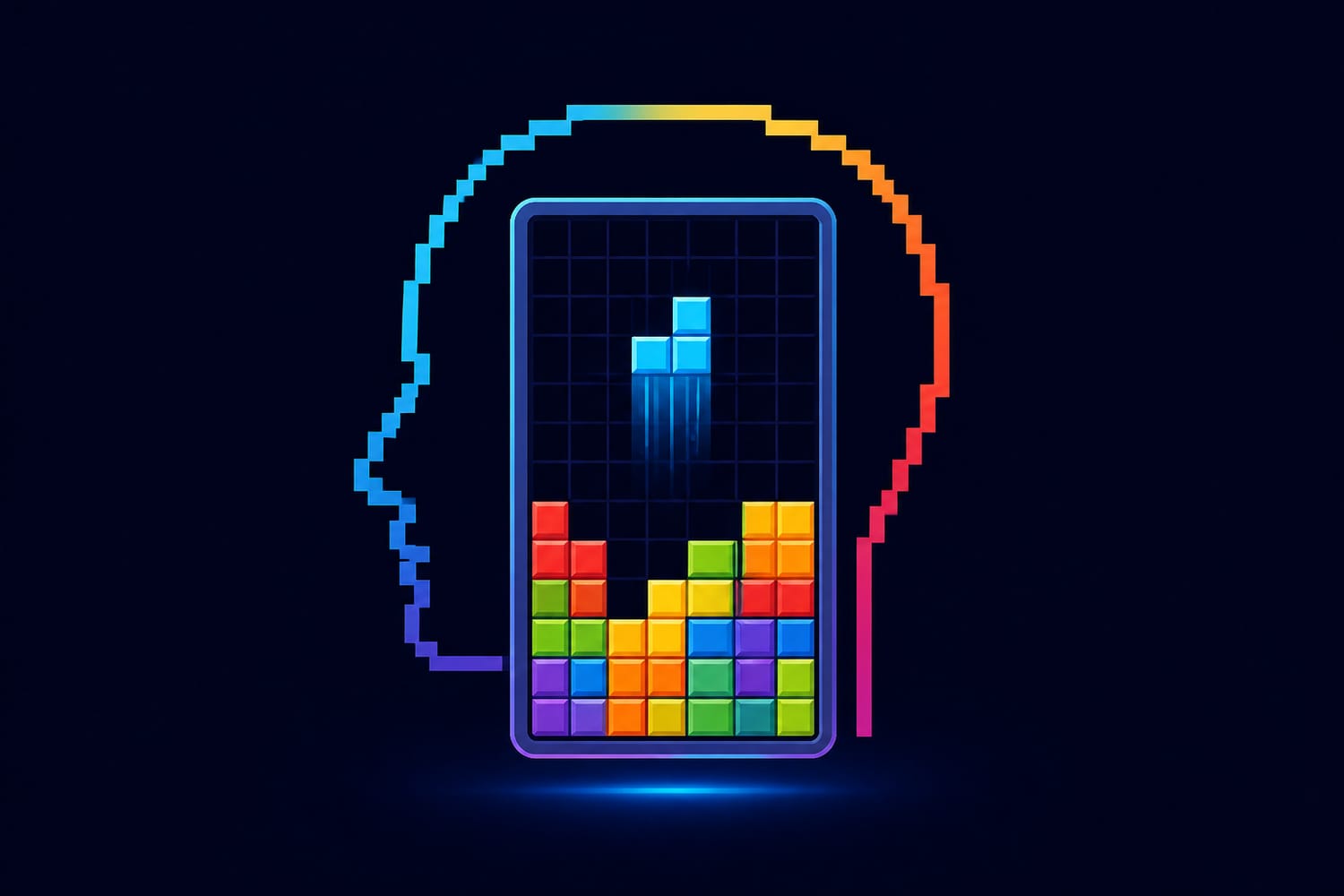
How Puzzle Games Strengthen Your Attention Span in a Distracted World
Why Attention Feels Harder Than Ever
We live in a world designed to compete for our attention. A message pings, a video auto-plays, a headline flashes, and before we know it, our focus has been pulled in five different directions. For many people, this constant switching can make it harder to stay with one task for long—whether that task is reading a book, finishing homework, working on a project, or simply having an uninterrupted conversation.
Attention span is not a fixed trait. It is more like a mental skill that can be supported, challenged, and strengthened over time. Just as physical exercise trains the body, certain mental activities can help train the brain’s ability to concentrate. Puzzle games are one of the most enjoyable ways to do this.
From jigsaw puzzles and crosswords to Sudoku, logic grids, word searches, match games, and spatial challenges, puzzles encourage the brain to slow down, notice details, remember rules, and work toward a goal. They are fun, but they also ask something important of us: to stay engaged.
That simple act—remaining mentally present long enough to solve a challenge—is one reason puzzle games can be valuable in a distracted world.
What Attention Span Really Means
Attention span is the amount of time a person can focus on a task without becoming distracted or needing to switch to something else. But attention is not just one thing. Psychologists often describe attention in several forms.
Sustained attention is the ability to keep focusing over time. This is what you use when reading a chapter, solving a long puzzle, or listening carefully to instructions.
Selective attention is the ability to focus on one thing while ignoring distractions. You use it when finding a hidden object in a busy image or locating a word in a word search.
Divided attention involves handling more than one stream of information at once, though the brain has limits here. Many people call this multitasking, but research shows that rapidly switching between tasks often reduces efficiency and increases mistakes.
Executive attention helps manage decisions, control impulses, and shift strategies when something is not working. This is especially important in logic puzzles, where a wrong assumption may need to be corrected.
Puzzle games can involve all of these attention systems. They invite players to focus, filter information, remember patterns, and adapt their thinking. Over time, regularly practicing these skills may help people become more aware of how they pay attention.
How Puzzle Games Train Focus
Puzzle games strengthen attention by creating a clear goal and a manageable challenge. Unlike endless scrolling, puzzles usually have a beginning, a process, and an ending. That structure matters. It gives the mind something specific to work toward.
When you play a puzzle game, your brain must identify what is relevant. In Sudoku, you ignore numbers that do not affect the current square and focus on the row, column, and box. In a jigsaw puzzle, you sort shapes, colors, and edges. In a crossword, you hold clues in mind while testing possible answers. These actions require concentration and mental organization.
Puzzle games also reward patience. Many modern digital experiences are built around quick reactions and instant rewards. Puzzles often ask you to pause, think, and try again. That slower rhythm can be refreshing. It teaches that not every answer appears immediately—and that staying with a problem can be satisfying.
Another benefit is that puzzles provide feedback. When a piece fits, a word makes sense, or a logic step works, the player gets a small sense of progress. This feedback helps maintain motivation without needing constant outside stimulation. The brain learns to enjoy concentration itself.
The Role of Working Memory
Working memory is the brain’s short-term mental workspace. It allows you to hold and use information for a brief period. For example, when solving a puzzle, you may need to remember that a certain symbol cannot go in one area, that a clue has two possible answers, or that a pattern repeats every few steps.
Many puzzle games naturally challenge working memory. Sudoku requires players to keep track of possible numbers. Matching games ask players to remember where images are located. Word puzzles may require holding several letters or meanings in mind at once. Logic puzzles often involve multiple conditions that must be compared.
Working memory and attention are closely connected. If your attention wanders, it becomes harder to hold information in mind. If your working memory is overloaded, your attention may break down. Puzzle games train both by encouraging players to stay organized and mentally active.
However, it is important to be accurate: playing puzzle games is not a magic cure for attention problems, and it will not instantly transform focus in every area of life. Research on cognitive training shows mixed results, especially when it comes to whether improvements transfer broadly to unrelated tasks. Still, puzzles can be a healthy and enjoyable way to practice concentration, problem-solving, and persistence.
Puzzles Encourage Deep Thinking
One of the most valuable things about puzzle games is that they encourage deep thinking. Deep thinking is different from quick reaction. It involves reflection, planning, and careful observation.
In a logic puzzle, guessing may work for a moment, but thoughtful reasoning usually wins. In a jigsaw puzzle, rushing may lead to frustration, while patient sorting creates progress. In a crossword, one clue may not make sense until another answer gives you a helpful letter. These experiences teach players to look for connections.
This kind of thinking supports attention because it gives the mind a reason to remain engaged. Instead of passively receiving information, the player becomes an active participant. The brain asks questions: What do I know? What can I rule out? What pattern am I missing? What happens if I try this?
That active engagement can feel especially rewarding because puzzles balance challenge and control. A good puzzle is not too easy and not impossibly hard. It sits in the zone where you must focus, but success still feels possible. This balance is closely related to what some researchers call “flow,” a state of deep involvement in an activity. Flow can happen during sports, music, art, reading, and yes—puzzle solving.
A Healthy Alternative to Mindless Scrolling
Not all screen time is the same. Watching short videos for an hour, reading an article, playing a strategy game, and solving puzzles all engage the brain differently. The key question is not only “How much screen time?” but also “What kind of screen time?”
Puzzle games can be a more active form of digital entertainment. Instead of simply reacting to whatever appears next, the player must think, choose, and solve. This does not mean puzzle games should replace outdoor play, sleep, social time, schoolwork, exercise, or hobbies. Balance is still important. But when chosen thoughtfully, puzzle games can be part of a healthy routine.
For children, puzzles can support skills like patience, pattern recognition, spatial reasoning, and vocabulary. For adults, they can provide a calming mental break from work or daily stress. For older adults, puzzles may offer enjoyable cognitive stimulation and a sense of accomplishment. People of all ages can benefit from activities that keep the mind engaged.
The best puzzle games invite you to focus without overwhelming you. They should feel like a satisfying challenge, not a source of stress.
How Puzzle Games Build Patience and Persistence
Attention span is not only about focusing when something is easy. It is also about staying with something when it becomes difficult. Puzzle games are excellent practice for this.
Every puzzle solver knows the feeling of being stuck. A word will not come to mind. A number does not fit. A hidden object seems impossible to find. At that moment, the player has a choice: quit immediately or try a new strategy.
This is where persistence grows. Players learn to scan from a different angle, take a break, revisit clues, sort pieces again, or eliminate impossible options. These strategies are useful far beyond games. They apply to studying, work projects, creative tasks, and everyday problem-solving.
Puzzle games also teach emotional regulation. Frustration is normal when a challenge is difficult. But puzzles provide a safe environment to practice calming down and continuing. The stakes are low, but the lesson is meaningful: difficulty does not mean failure.
Over time, this can strengthen confidence. Each solved puzzle becomes evidence that effort matters. That feeling can encourage players to approach future challenges with more patience.
Puzzles and Mindfulness
Puzzle games can also support mindfulness, which means paying attention to the present moment with awareness. While meditation is one form of mindfulness, it is not the only one. Many activities can become mindful when done with focus and intention.
Working on a puzzle often brings attention into the present. You notice colors, shapes, numbers, letters, patterns, and possibilities. You are not worrying about ten different things at once; you are focused on the next move. This can be calming, especially after a busy or overstimulating day.
Some people find that puzzles help reduce stress because they create order from disorder. A jigsaw puzzle begins as scattered pieces and slowly becomes a complete image. A word puzzle begins with blank spaces and gradually fills with meaning. This process can feel grounding.
Of course, puzzles are not a replacement for professional help when someone is dealing with serious stress, anxiety, or attention difficulties. But as a daily wellness habit, puzzle games can offer a gentle way to relax while keeping the mind active.
Choosing the Right Puzzle for Your Brain
Different puzzles train different skills. Choosing a variety can keep the experience fresh and engaging.
Word puzzles, such as crosswords and word searches, support vocabulary, spelling, memory, and language flexibility. They are great for people who enjoy clues, meanings, and associations.
Number puzzles, such as Sudoku or KenKen-style games, encourage logical reasoning, pattern detection, and careful elimination. You do not need advanced math to enjoy many number puzzles; often, logic matters more than calculation.
Visual puzzles, such as jigsaws, spot-the-difference games, and hidden-object challenges, strengthen observation, spatial awareness, and selective attention.
Logic puzzles, such as grid puzzles or sequence challenges, support planning, deduction, and executive attention. These puzzles are especially good for people who enjoy step-by-step reasoning.
Memory puzzles challenge recall and concentration. They can be simple enough for children but still useful for adults who want a quick mental workout.
The “best” puzzle is the one you will actually play. Enjoyment matters because consistency matters. A puzzle that feels fun is more likely to become a habit.
Making Puzzle Games Part of a Balanced Routine
To get the most benefit from puzzle games, use them intentionally. You do not need to play for hours. In fact, short and consistent sessions may be more useful than occasional marathon sessions.
A good routine might be 10 to 20 minutes a day, or a few longer sessions each week. You can play during a lunch break, after school, before bed, or whenever you want a focused mental reset. If you use digital puzzle games, consider taking screen breaks and resting your eyes.
It also helps to notice your attention while you play. Did your mind wander? Did you feel impatient? Did you improve after slowing down? This self-awareness is part of the benefit. Puzzle games can teach you not only to focus, but to understand your own focus patterns.
Families can also use puzzles together. A shared puzzle encourages conversation, teamwork, and cooperative problem-solving. Children can learn from adults, and adults can enjoy seeing how children approach challenges creatively. Puzzles are one of the rare activities that can be simple, social, educational, and fun at the same time.
A Small Game with Big Benefits
In a distracted world, attention is precious. It helps us learn, create, connect, and make thoughtful decisions. While no single activity can solve every focus challenge, puzzle games offer a practical and enjoyable way to practice paying attention.
They train the mind to observe carefully, remember details, test ideas, and stay patient. They provide structure in a world of constant interruption. They reward effort and curiosity. Most importantly, they make concentration feel fun.
Whether you enjoy a quick word puzzle, a relaxing jigsaw, a challenging Sudoku, or a clever logic game, each puzzle is a chance to strengthen your focus one move at a time. In the end, puzzle games remind us of something simple but powerful: the mind grows stronger when we give it something meaningful to solve.

