
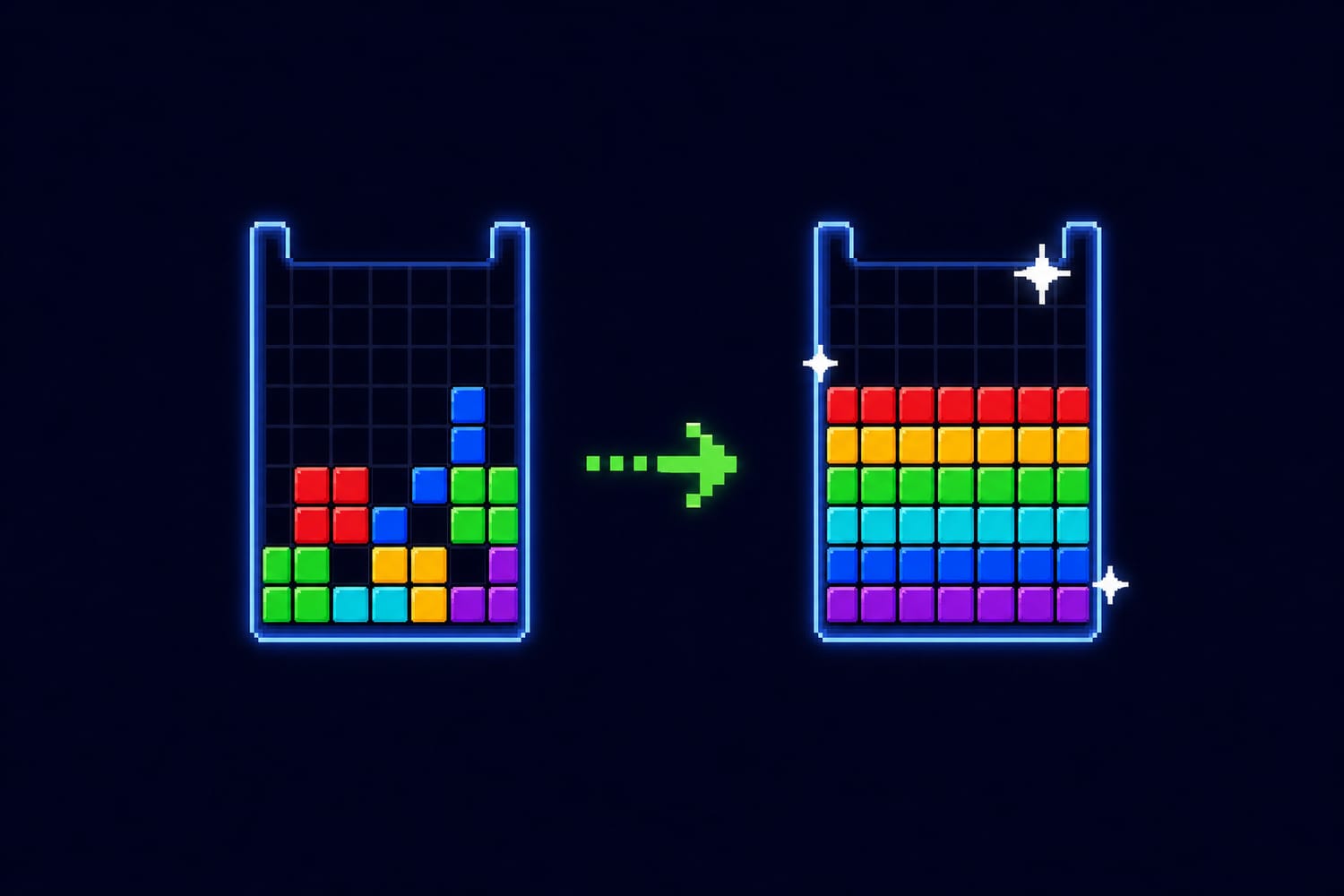
Work Backward: The Puzzle Strategy Beginners Forget and Pros Use Constantly
Why Working Backward Feels Like a Secret Door
Many puzzle beginners start every challenge the same way: they look at the beginning and ask, “What can I do first?” That is a natural question—and often a useful one. But experienced puzzle solvers know another question can be even more powerful:
“What must be true at the end?”
That question is the heart of the “work backward” strategy. Instead of only moving forward from the starting point, you begin by studying the goal, the final state, or the finished pattern. Then you reason backward step by step until the path becomes clearer.
This technique appears everywhere: mazes, Sudoku, jigsaw puzzles, escape-room clues, chess puzzles, logic grids, word games, matchstick puzzles, number riddles, and even video game puzzle levels. It is not a trick for experts only. In fact, it is one of the most beginner-friendly strategies because it gives your brain a new angle when the obvious path is blocked.
Working backward helps because puzzles often hide the solution in constraints. The ending usually has rules that must be satisfied. Once you understand those rules, you can eliminate wrong moves, identify necessary steps, and avoid wasting time on paths that look promising but cannot possibly work.
What “Work Backward” Actually Means
Working backward does not mean guessing the answer and hoping it fits. It means using the goal of the puzzle as a source of information.
For example, imagine a maze. Most people begin at the entrance and try paths until one reaches the exit. But if the maze is tricky, you can start at the exit and trace paths backward. Sometimes the exit has only one valid approach, making the final route easier to identify.
In a Sudoku puzzle, working backward might mean looking at a nearly complete row, column, or 3×3 box and asking which number must go in the final empty square. In a logic puzzle, it might mean starting with the final condition: “Only one person can be the owner of the red bicycle,” then identifying which clues must support or contradict that outcome.
In a word puzzle, you might know the final answer has seven letters and ends in “-ING.” That ending becomes a backward clue. You can then ask: Which words fit the length, pattern, and clue?
The strategy is simple:
- Identify the goal or final condition.
- Ask what must happen immediately before that goal.
- Repeat the process one step earlier.
- Use the discovered constraints to guide your forward solving.
In other words, you are building a bridge from both sides.
Why Beginners Often Forget This Strategy
Beginners tend to solve puzzles from left to right, top to bottom, or start to finish because that is how we read and how many instructions are presented. If a puzzle begins with “Start here,” it feels natural to begin there.
But puzzles are not always designed to be solved in the same order they are read. A clue at the end may unlock a clue at the beginning. A final image may reveal where a jigsaw piece belongs. A locked door in a game may tell you which key or tool you should be looking for.
Another reason beginners forget to work backward is that it can feel like “cheating.” It is not. Looking at the goal is part of solving. Puzzle designers expect solvers to notice end conditions, patterns, and constraints. In many puzzles, the endpoint is deliberately placed where players can see it, precisely so they can reason about it.
Pros use this constantly because it reduces uncertainty. If there are ten possible first moves, but only one move can lead to the required final position, working backward helps you find that move faster.
The Power of “Must,” Not “Maybe”
One of the biggest benefits of working backward is that it shifts your thinking from “maybe” to “must.”
Forward solving often produces possibilities:
- “Maybe this number goes here.”
- “Maybe this path works.”
- “Maybe this clue refers to that object.”
Backward solving looks for necessities:
- “The final square must be reached from the left.”
- “This row must contain a 7.”
- “The last move must place the blue block near the exit.”
- “The answer must rhyme with the clue.”
This is powerful because puzzles are built on rules. Every correct solution must obey those rules. When you find something that must be true, you gain a solid foothold.
Consider a simple matchstick puzzle where the goal is to form exactly three triangles by moving one stick. Instead of randomly moving sticks, study the final condition. Three triangles require certain shared sides or connections. You can ask: “Where could one moved stick create the missing side of a triangle?” That narrows the puzzle quickly.
The same idea applies to number puzzles. If the goal is to make 24 using four numbers, and you see a 6, you might work backward: “To make 24, I could do 6 × 4. Can the other numbers make 4?” Now you are not trying random arithmetic—you are aiming at a target.
How to Use Working Backward in Common Puzzle Types
Working backward looks slightly different depending on the puzzle, but the core idea stays the same.
Mazes
Start at the exit and trace backward. Dead ends near the exit are often easier to spot from that direction. If the maze has one correct path, working from both entrance and exit can help you meet in the middle.
Sudoku and Number Grids
Look for rows, columns, or boxes that are nearly complete. Instead of asking where a number could go across the whole puzzle, ask what number is missing from a specific finished unit. The “final state” of every row, column, and box is that it contains each required number exactly once.
Jigsaw Puzzles
The finished image is the goal. Work backward by studying the picture on the box or preview image. Identify color zones, borders, textures, and unique shapes. If you know a piece belongs in the sky because of its color, you have used the final image to guide the current step.
Logic Puzzles
Read the question or final task first. If the puzzle asks, “Who owns the green house?” then every clue should be tested against that goal. Work backward from possible owners and eliminate anyone who contradicts the clues.
Escape Room and Adventure Puzzles
Look at the lock, door, or final mechanism. Does it need a four-digit code, a word, a color sequence, a shape pattern, or a key? The answer format tells you what kind of clue matters. A poem may not give a number, but a calendar, clock, or set of symbols might.
Sliding Block Puzzles
Study where the target block must end. Then ask what must be moved out of its way. Often the last few moves require specific spaces to be empty, so planning backward prevents you from trapping pieces.
A Simple Step-by-Step Method
If you want to practice working backward, use this method:
- Define the finish. What does “solved” look like? Be specific.
- Find the last action. What move, placement, word, number, or decision could complete the puzzle?
- Identify requirements. What must be true for that last action to be possible?
- Move one step earlier. What must happen before those requirements can be met?
- Combine with forward progress. Use backward insights to choose better moves from the start.
- Check for contradictions. If a path cannot lead to the required ending, eliminate it.
This method is especially helpful when a puzzle has too many possible moves. You do not need to explore all of them. You only need to explore the ones that can connect to the solution.
A good mental phrase is: “If this is the ending, what would have to be true just before it?”
A Mini Example: The Locked Box Code
Imagine a puzzle where you need a three-digit code to open a box. Around the room are several clues: a drawing of three apples, a clock showing 4:00, a note that says “second comes first,” and a shelf with books numbered 1 through 9.
A beginner might inspect everything randomly. But working backward begins with the lock: it needs exactly three digits. That tells you the answer will probably not be a long word or full sentence. The note “second comes first” suggests order matters. The clock gives a digit, 4. The apples give 3. The books may provide another number depending on which book is highlighted or missing.
By starting from the final format—three digits—you know what kind of information to collect. You also know to pay attention to sequence clues. Even without solving the whole puzzle instantly, you have reduced the chaos.
This is why backward thinking is so useful. It turns a room full of objects into a focused search.
When Working Backward Is Not Enough
Working backward is powerful, but it is not the only strategy you need. Some puzzles are designed so that the ending is hidden until you solve earlier clues. Others require experimentation, pattern recognition, memory, or creative leaps.
If working backward does not immediately help, combine it with other strategies:
- Work forward until you uncover more information.
- Make a list of possible answers or moves.
- Look for patterns in shapes, colors, sounds, or numbers.
- Eliminate impossibilities one by one.
- Take a break to reset your perspective.
- Explain the puzzle aloud as if teaching someone else.
The best solvers are flexible. They do not rely on one method. They switch angles when needed.
Working backward is especially effective when the puzzle has a clear goal, limited final states, or strict rules. It is less effective when the puzzle is open-ended or when the goal itself is part of the mystery. Even then, asking “What would a finished answer look like?” can still provide direction.
How to Practice the Skill
Like any puzzle strategy, working backward improves with practice. The more often you use it, the more natural it becomes.
Try this exercise: the next time you play a puzzle, pause before making your first move. Spend ten seconds looking at the end condition. Ask:
- What am I trying to create, reach, unlock, or prove?
- What does the final answer need to look like?
- What would the last step probably be?
- Are there any spaces, numbers, pieces, or clues that must be involved?
You do not need to solve the puzzle backward completely. Even one backward observation can save time.
For kids and beginners, this strategy is also a great way to build confidence. It teaches that being stuck does not mean being bad at puzzles. It simply means you may need a different viewpoint.
For experienced players, it is a way to solve more efficiently. Pros often appear fast because they are not checking every option. They are filtering options through the end goal.
The Puzzle-Solver’s Mindset
Working backward is more than a technique. It is a mindset. It reminds you that puzzles are designed with solutions in mind. Every clue, rule, and obstacle exists in relation to the final answer.
When you work backward, you start to see puzzles less like a confusing mess and more like a structure. The ending sends signals. The goal creates constraints. The final move casts a shadow backward over everything that comes before it.
That is why pros use this strategy constantly. It helps them spot hidden order, avoid unnecessary guesses, and make smarter decisions.
So the next time a puzzle seems impossible, do not only push forward harder. Turn around. Look at the finish line. Ask what must be true before the win.
Sometimes the best way forward is backward.

