
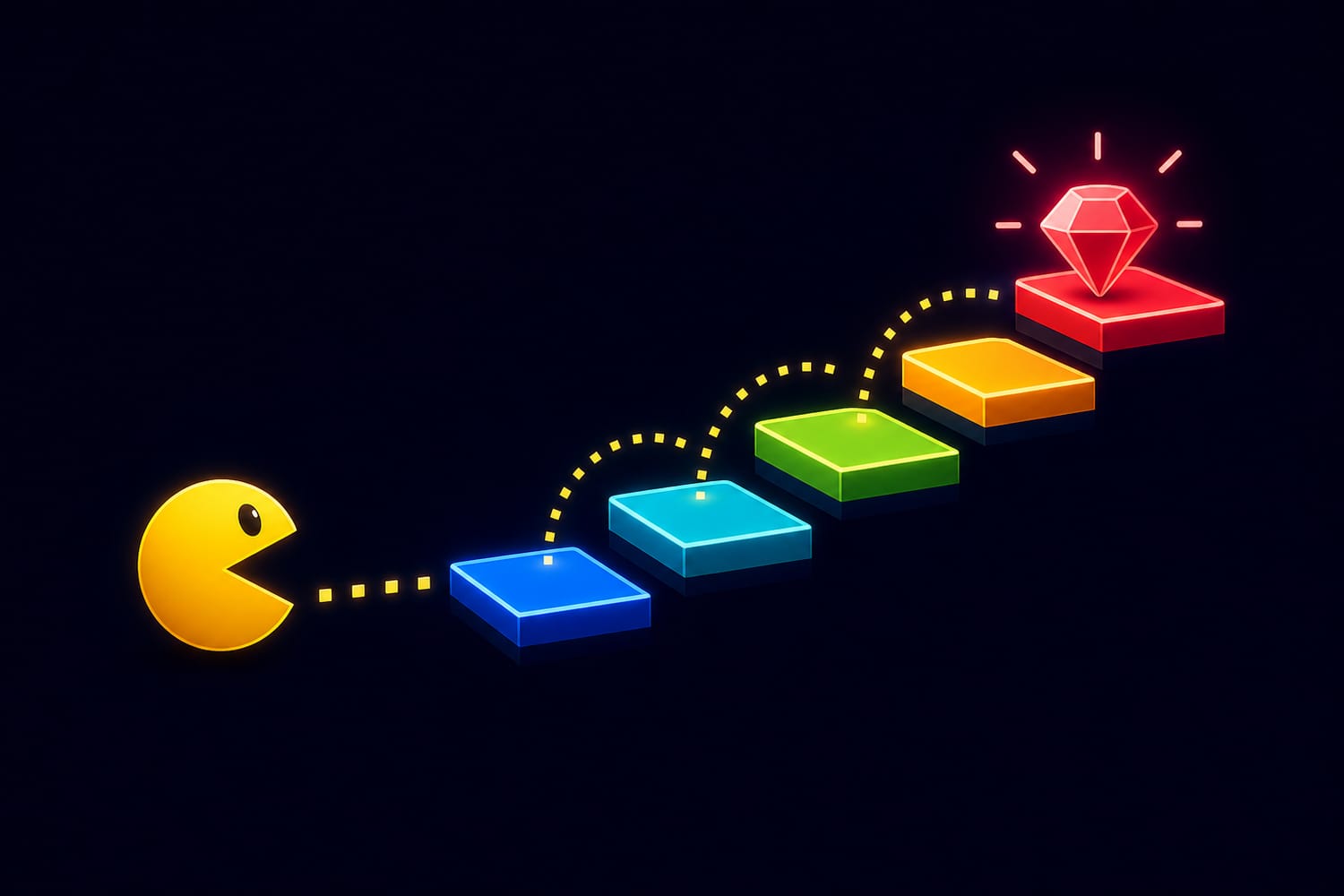
The Hint Ladder: How to Get Unstuck Without Spoiling the Solution
Why “Getting Stuck” Is Part of the Puzzle
Every puzzle player knows the feeling: you are one step from a breakthrough, but your brain keeps circling the same idea like a marble in a maze. Maybe it is a word puzzle with one stubborn clue, a logic grid with too many possibilities, a jigsaw-like matching challenge, or a pattern game where the next move just will not appear. Getting stuck can feel frustrating, but it is not a sign that you are bad at puzzles. In fact, it is often the exact moment when learning happens.
Puzzles are designed to create productive friction. They invite you to test assumptions, notice patterns, remember rules, and try new approaches. If every answer appeared instantly, there would be no satisfying “aha!” moment. The trick is learning how to move forward without jumping straight to the full solution.
That is where the “hint ladder” comes in. Instead of going from “I’m stuck” to “show me the answer,” a hint ladder gives you a series of gentle nudges. Each rung offers just enough help to restore momentum while preserving the joy of discovery. Think of it as asking for a flashlight, not a map.
What Is a Hint Ladder?
A hint ladder is a step-by-step approach to getting help. The lowest rungs are very subtle: rereading the rules, changing your perspective, or checking for overlooked details. Higher rungs become more direct: narrowing possibilities, revealing a useful principle, or identifying the part of the puzzle that matters most. The top rung is the solution itself, but the goal is to avoid climbing that high unless you truly need to.
This method works for almost every puzzle type: crosswords, Sudoku, escape-room riddles, match-3 challenges, hidden-object games, number puzzles, word searches, logic puzzles, and arcade-style puzzle games. It is especially helpful because “stuck” does not always mean the same thing. Sometimes you are missing information. Sometimes you are using the wrong strategy. Sometimes you made a tiny mistake earlier and built everything on top of it.
A good hint ladder helps you diagnose the problem before giving away the prize.
Rung One: Reset Your Attention
The first rung is not really a hint from the outside. It is a reset. When you stare at a puzzle too long, your brain can become “locked in” to one interpretation. You may keep seeing the same false pattern or trying the same move because it almost works.
Start by stepping away for a moment. Look at something else. Stretch. Take a sip of water. If you are playing on Puzzles Arcade, you might switch to another puzzle for a few minutes and come back fresh. This is not quitting; it is giving your brain room to reorganize the information.
When you return, review the basics:
- What is the goal?
- What are the rules?
- What information is fixed?
- What can still change?
- Have you assumed something that the puzzle never actually said?
Many puzzles hide difficulty in plain sight. A word like “exactly,” “at least,” “before,” “not,” or “only” can completely change the solution. In visual puzzles, a color, border, shadow, or repeated shape might be important. In number puzzles, the position of a digit may matter more than the digit itself.
This rung protects you from the most common puzzle mistake: solving the puzzle you think you are playing instead of the puzzle that is actually in front of you.
Rung Two: Look for the Smallest Certain Move
When you feel stuck, it is tempting to search for the biggest breakthrough. But many puzzles unlock through small certainties. Instead of asking, “What is the answer?” ask, “What do I know for sure?”
In a Sudoku-style puzzle, this might mean finding a single square that has only one possible number. In a word puzzle, it may be one letter you can confirm from a crossing clue. In a matching puzzle, it could be one pair that definitely belongs together. In a maze, it might be a path that clearly leads to a dead end and can be ignored.
The key is to avoid guessing too early. Guessing can be useful in some puzzle types, but if you do it without tracking your reasoning, it can create confusion. A small certain move gives you stable ground. Once you place one correct piece, other pieces often become easier.
Try marking possibilities. You can do this mentally, on paper, or with in-game tools if available. The act of narrowing options is itself progress. Even learning that something cannot work is valuable information.
Rung Three: Change the View
If the answer is not visible from one angle, change the angle. This is one of the most powerful anti-spoiler strategies because it gives your brain new access to the same information.
For word puzzles, read clues in a different order. Start with the shortest answers, the longest answers, or the clues that seem most concrete. For logic puzzles, organize information into a table or timeline. For visual puzzles, zoom out and look for symmetry, repetition, empty space, or differences between similar objects. For sequence puzzles, compare the change from one step to the next rather than staring at the items individually.
You can also reverse the puzzle. Instead of asking, “What move gets me closer to the goal?” ask, “What would the final position require?” This backward thinking is especially useful in sliding puzzles, route puzzles, and strategy challenges.
Another helpful trick is to simplify. If the puzzle is large, create a smaller version in your mind. What would the rule look like with only three pieces? What if there were only two colors, two doors, or two possible answers? Simpler examples can reveal the hidden structure.
Rung Four: Ask for a Nudge, Not the Answer
If you still cannot move forward, it may be time for an actual hint. But not all hints are equal. A solution tells you what to do. A good nudge tells you where to look.
When asking another person for help, be specific about the kind of hint you want. You might say:
- “Can you tell me which part I should focus on?”
- “Am I missing a rule?”
- “Is my current assumption wrong?”
- “Can you give me a tiny hint, not the answer?”
- “Which clue is the key clue?”
This keeps the puzzle alive. Instead of removing the challenge, the other person becomes part of your hint ladder.
If you are using an online hint system, try to stop after each hint and return to the puzzle. Do not read the whole hint list at once. The first clue may be enough. Many players accidentally spoil puzzles not because they needed the final answer, but because they consumed hints too quickly.
A useful hint should create motion. It should make you think, “Oh, I can try something now,” rather than “Oh, now I know the solution.”
Rung Five: Identify the Bottleneck
Sometimes the best hint is not about the final answer; it is about identifying what is blocking you. A bottleneck is the specific point where progress stops. Naming it can make the puzzle feel manageable.
For example:
- “I do not know how these symbols relate.”
- “I have too many possible words.”
- “I can solve the left side but not the right side.”
- “I understand the rule, but I cannot execute it fast enough.”
- “I think one earlier move was wrong.”
Once you name the bottleneck, choose a strategy that matches it. If you have too many possibilities, eliminate options. If you do not understand a symbol, search for repeated uses of it. If timing is the issue, practice the motion separately. If an earlier move may be wrong, backtrack to the last point where you were certain.
This is especially important in puzzle games with multiple stages or mechanics. Players often assume they are stuck on the current screen, when the real problem is an idea introduced earlier. Revisit tutorials, previous levels, or repeated design patterns. Puzzle creators often teach you a concept in a simple form before asking you to apply it in a clever way.
Rung Six: Use Partial Spoilers Carefully
A partial spoiler reveals one piece of the solution but not the whole thing. Used carefully, it can save a puzzle from becoming a chore. Used carelessly, it can collapse the experience.
Examples of partial spoilers include:
- Revealing the first letter of a word
- Confirming whether a move is legal
- Showing one correct placement
- Identifying the relevant rule
- Pointing out one hidden object
- Telling you which clue connects to which answer
The best partial spoiler gives you a new foothold while leaving the climb intact. If you reveal one letter in a crossword, you still need to solve the clue. If you learn that a puzzle depends on symmetry, you still need to find how. If you confirm that a certain path is wrong, you still need to discover the right one.
Before accepting a partial spoiler, decide what kind of help would be least revealing. For many puzzles, “where to look” is less spoilery than “what to do.” For others, “what rule matters” is better than “which exact move to make.”
Rung Seven: Know When to Take the Solution
There is no shame in taking the solution. Puzzles are meant to be enjoyable, not punishing. If you have tried multiple approaches, taken breaks, used smaller hints, and still feel more annoyed than curious, the full answer may be the right choice.
The important part is what you do after seeing it. Instead of simply moving on, take a moment to understand why the solution works. Ask:
- What clue did I miss?
- What assumption led me away from the answer?
- Was there a rule I forgot?
- Could I recognize this pattern next time?
- Did the puzzle require knowledge I did not have?
This turns a spoiler into a lesson. Many expert puzzle solvers become skilled not because they never use answers, but because they study solutions. They build a library of patterns: common wordplay tricks, logic structures, visual misdirection, counting methods, and strategic setups.
A solved puzzle can still be valuable if it improves your next attempt.
Building Your Personal Hint Ladder
Different players need different hint ladders. Some people love sitting with a puzzle for hours. Others prefer a steady flow of progress. Some enjoy cryptic wordplay, while others prefer spatial reasoning or fast arcade decisions. There is no single “correct” amount of help.
You can create your own default ladder:
- Reread the goal and rules.
- Take a short break.
- List what is certain.
- Change perspective or simplify.
- Ask for a gentle nudge.
- Use a partial hint.
- Check the solution and study it.
This structure works because it protects the fun. You are not refusing help; you are pacing it. You are giving yourself the best chance to experience the discovery while avoiding unnecessary frustration.
For younger players, a hint ladder also builds confidence. Instead of feeling that a puzzle is either “easy” or “impossible,” they learn that being stuck has steps. For experienced players, it encourages discipline and prevents over-reliance on spoilers. For everyone, it makes puzzle-solving more thoughtful.
The Real Win Is the “Aha!”
The most memorable puzzle moments are not always the hardest ones. They are the moments when confusion suddenly becomes clarity. A hidden pattern appears. A clue clicks. A move that seemed impossible becomes obvious. That little spark is the heart of puzzle play.
The hint ladder helps preserve that spark. It lets you get support without giving up the satisfaction of solving. Whether you are playing a quick daily puzzle, exploring a tricky logic challenge, or working through a colorful arcade puzzler, remember: hints are tools, not failures.
Climb only as high as you need. Stop as soon as you can move again. And when the solution finally clicks, enjoy it—you earned the “aha!” the smart way.

