
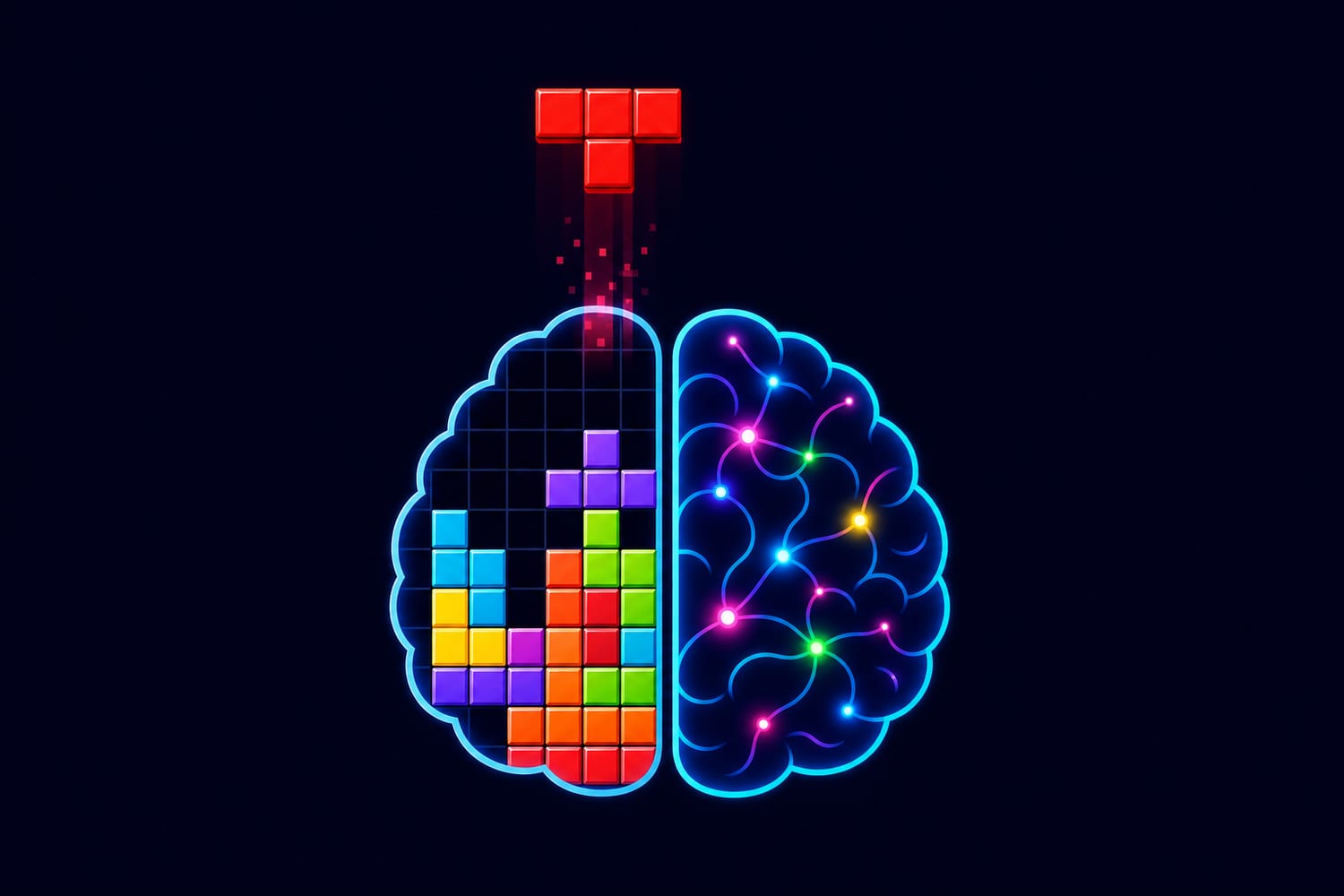
Puzzle Games and Neuroplasticity: How Play Helps Your Brain Adapt
Puzzle games are often seen as simple entertainment: a crossword with morning coffee, a jigsaw puzzle on a rainy day, a number game on your phone, or a logic challenge before bed. But behind the fun, your brain is doing something remarkable. It is noticing patterns, testing strategies, remembering clues, correcting mistakes, and building new ways to solve problems.
This ability to change and adapt is called neuroplasticity. It is one of the most exciting discoveries in modern neuroscience because it shows that the brain is not fixed like a machine. Instead, it is more like a living garden: the more certain pathways are used, the stronger they can become. With the right kinds of challenge, rest, and repetition, the brain can continue learning throughout life.
Puzzle games are not magic cures, and they do not make anyone “smarter overnight.” But they can be a meaningful part of a brain-healthy lifestyle. They encourage focus, patience, memory, flexible thinking, and problem-solving—all abilities connected to how the brain learns and adapts.
What Is Neuroplasticity?
Neuroplasticity refers to the brain’s ability to reorganize itself by forming, strengthening, weakening, or changing connections between brain cells, called neurons. These connections help you think, move, remember, speak, learn, and respond to the world around you.
When you practice a skill, your brain uses certain networks again and again. Over time, those networks may become more efficient. This is why a beginner piano player must concentrate on every note, while an experienced musician can play smoothly. It is also why learning a new language, practicing a sport, or solving puzzles can become easier with repetition.
Neuroplasticity happens at every age, though it may work differently across the lifespan. Children’s brains are highly adaptable because they are still developing rapidly. Adult brains can also change, especially when people practice consistently, stay curious, and challenge themselves in healthy ways. Even older adults can learn new skills and build new habits.
The key idea is simple: the brain changes in response to experience. Puzzle games provide experience in the form of mental challenge, feedback, and reward.
How Puzzle Games Engage the Brain
Different kinds of puzzles activate different thinking skills. A jigsaw puzzle may rely heavily on visual-spatial reasoning, while a word puzzle may involve language and memory. A Sudoku puzzle challenges logic and working memory, while a match-3 game may involve pattern recognition and quick decision-making.
Here are some brain skills commonly used during puzzle play:
- Attention: Staying focused on the task and ignoring distractions.
- Working memory: Holding information in mind while using it, such as remembering possible moves.
- Pattern recognition: Spotting shapes, sequences, word structures, or number relationships.
- Cognitive flexibility: Changing strategies when one approach does not work.
- Planning: Thinking several steps ahead.
- Error correction: Noticing mistakes and adjusting your method.
- Persistence: Continuing after a difficult challenge.
These skills are not separate “brain muscles,” but they do involve networks across the brain working together. Puzzle games often encourage this teamwork in an enjoyable, low-pressure way.
The Learning Loop: Challenge, Feedback, and Improvement
One reason puzzle games are so engaging is that they create a clear learning loop. You try something, see what happens, adjust your approach, and try again. This cycle is important for learning.
Imagine you are solving a logic puzzle. At first, you may not know where to begin. You test one idea, discover it leads to a contradiction, and backtrack. Then you notice a clue you missed. Slowly, the puzzle begins to make sense. Each attempt gives feedback, and each piece of feedback helps your brain refine its strategy.
This process supports neuroplasticity because the brain is constantly comparing predictions with results. When a strategy works, you are more likely to remember it. When it fails, your brain learns to avoid that path or modify it.
Puzzle games also provide a sense of progress. Finishing a level, placing the final jigsaw piece, or solving a tricky clue can create a rewarding feeling. This positive feedback can increase motivation, making it more likely that you will return and practice again.
Why Variety Matters
If you play the same easy puzzle over and over, you may become faster at that specific puzzle, but the broader benefits may be limited. The brain adapts to repeated tasks. Once something becomes too automatic, it may not challenge you as much.
That is why variety is helpful. Different puzzles encourage different mental strategies. For example:
- Crosswords support vocabulary, general knowledge, and word retrieval.
- Sudoku encourages logic, concentration, and number placement.
- Jigsaw puzzles build visual-spatial reasoning and attention to detail.
- Word searches train scanning and visual attention.
- Maze puzzles involve planning and direction.
- Chess puzzles strengthen strategic thinking and prediction.
- Memory card games exercise recall and matching.
- Pattern puzzles develop sequencing and recognition skills.
Switching between puzzle types keeps the brain from relying on only one routine. It also makes play more interesting. Just as a balanced physical workout might include walking, stretching, and strength training, a balanced “mental workout” can include different forms of puzzle play.
Puzzle Games and Memory
Many puzzle games involve memory in some way. You may need to remember a rule, a clue, a previous mistake, or the location of a hidden card. This can engage working memory, which is the ability to hold and use information for a short period.
Working memory helps with everyday tasks such as following instructions, doing mental math, cooking from a recipe, or keeping track of a conversation. Puzzles that ask you to compare options, remember positions, or apply rules can give this system practice.
However, it is important to be accurate: playing a memory puzzle does not guarantee major improvements in all areas of memory. Research on brain training is mixed. People often improve at the specific games they practice, while transfer to unrelated tasks can vary. Still, puzzle games can be a fun and useful way to keep memory-related skills active, especially when combined with sleep, exercise, social connection, and lifelong learning.
Focus, Stress Relief, and the Joy of Flow
Puzzle games can also support mental well-being by encouraging focused attention. Many people describe becoming absorbed in a puzzle, losing track of time in a pleasant way. Psychologists often call this state flow—a feeling of deep engagement that happens when a challenge matches your skill level.
Flow can be relaxing because it gives the mind a clear target. Instead of worrying about many things at once, you are focused on one solvable problem. This does not mean puzzles replace professional mental health care, but they can be a healthy tool for relaxation and stress management.
The slow, steady nature of many puzzles can be especially calming. A jigsaw puzzle invites you to sit, look closely, and make small discoveries. A word puzzle can provide a satisfying daily ritual. A logic puzzle can turn anxious energy into structured thinking.
For children, puzzles can build patience and confidence. For adults, they can create a refreshing break from work. For older adults, they can offer enjoyable cognitive engagement and a sense of accomplishment.
Puzzle Games Across the Lifespan
One of the best things about puzzle games is that they can be adapted for nearly anyone.
For young children, puzzles help develop hand-eye coordination, shape recognition, language, and early problem-solving. Simple matching games, wooden puzzles, and picture-based challenges can make learning playful.
For students, puzzles can support persistence and flexible thinking. Math puzzles, word challenges, and strategy games encourage students to experiment rather than fear mistakes.
For adults, puzzle games can provide a break from routine and a way to practice focus. They can also be social, whether through trivia nights, escape rooms, board games, or cooperative puzzle apps.
For older adults, puzzles may help keep the mind active and engaged. Research suggests that mentally stimulating activities are associated with better cognitive health, though they are only one part of the picture. Physical activity, good sleep, healthy nutrition, medical care, and social connection also play major roles.
The goal at every age is not perfection. The goal is engagement, curiosity, and continued learning.
The Social Side of Puzzles
Although many puzzles can be played alone, they can also bring people together. Families may work on a jigsaw puzzle at the kitchen table. Friends may team up for a trivia challenge. Online communities may share hints, strategies, and daily scores.
Social puzzle play adds extra benefits. It encourages communication, cooperation, turn-taking, and shared problem-solving. Explaining your reasoning to someone else can deepen your own understanding. Listening to another person’s approach can reveal strategies you would not have considered.
This kind of collaboration is also good for motivation. A puzzle that feels frustrating alone may become fun when solved with a partner. Shared success strengthens relationships, and positive relationships are an important part of overall brain health.
Healthy Puzzle Habits
Like any enjoyable activity, puzzle gaming is best when balanced. Playing for hours without breaks can lead to eye strain, stiffness, or frustration. The brain benefits from challenge, but it also needs rest.
Healthy puzzle habits include:
- Taking short breaks during long sessions.
- Choosing difficulty levels that motivate rather than discourage.
- Mixing digital puzzles with offline activities.
- Stretching your hands, neck, and shoulders.
- Avoiding late-night screen time if it affects sleep.
- Celebrating effort, not just speed or high scores.
Sleep is especially important for learning. During sleep, the brain helps organize and consolidate memories. If you stay up too late playing puzzle games, you may reduce one of the very things that supports neuroplasticity. A good puzzle routine should leave you feeling refreshed, not drained.
What Puzzle Games Can and Cannot Do
It is worth being clear: puzzle games are beneficial, but they are not miracle tools. They cannot prevent every memory problem, cure neurological conditions, or replace medical treatment. Claims that any single game can dramatically transform the brain should be viewed carefully.
What puzzle games can do is provide regular mental stimulation. They can help you practice attention, logic, memory, and flexible thinking. They can create moments of calm and satisfaction. They can encourage learning through trial and error. They can be part of a lifestyle that supports brain health.
The strongest approach is a balanced one: combine puzzle play with physical movement, nutritious food, quality sleep, meaningful social contact, and new learning experiences. Your brain adapts to your whole life, not just one activity.
Play as a Path to Lifelong Learning
Puzzle games remind us that learning does not have to feel like homework. It can be playful, colorful, surprising, and fun. Every time you rotate a puzzle piece, test a word, scan for a pattern, or rethink a strategy, your brain is practicing adaptation.
That is the heart of neuroplasticity: the ability to change through experience. Puzzle games create small, enjoyable experiences of challenge and discovery. Over time, those moments can support useful habits—patience, focus, curiosity, and resilience.
Whether you enjoy crosswords, Sudoku, jigsaws, logic games, hidden objects, or arcade-style brain teasers, the best puzzle is one that keeps you interested. Start where you are, increase the challenge gradually, and enjoy the process.
Your brain is built to learn. Puzzle games simply give it a playful reason to keep going.

