
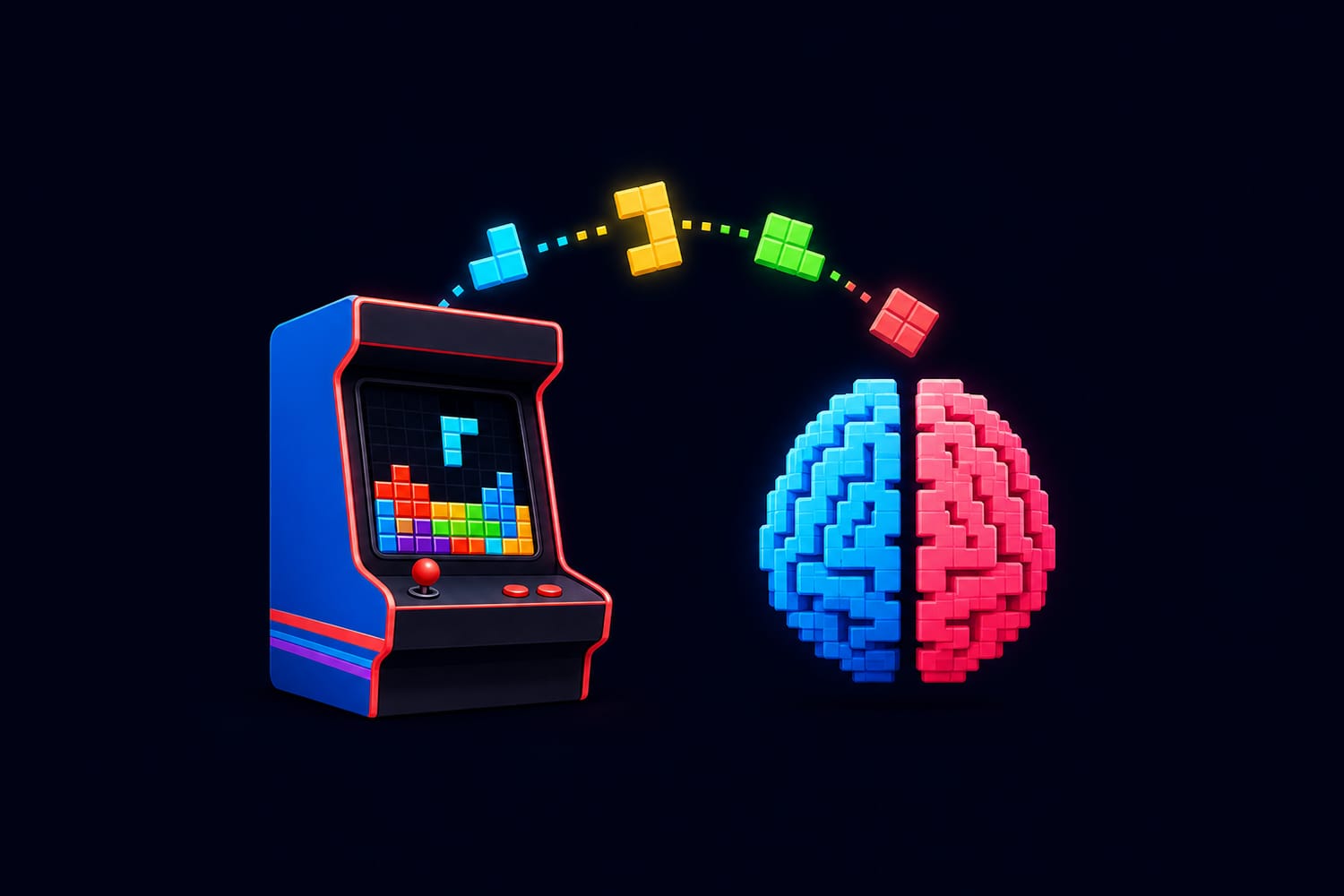
How Puzzle Play Builds Cognitive Flexibility for Everyday Problem Solving
What Cognitive Flexibility Means in Everyday Life
Cognitive flexibility is the brain’s ability to shift thinking, adapt to new information, switch strategies, and see problems from more than one angle. It is one of the key “executive functions” that helps us manage daily life, along with attention, working memory, planning, and self-control.
In simple terms, cognitive flexibility is what helps you say, “That didn’t work—what else can I try?”
You use it when a recipe is missing an ingredient and you need to substitute something else. You use it when your usual route is blocked and you find another way home. You use it when a conversation changes direction, a work plan needs adjusting, or a child asks a surprisingly complicated question at bedtime.
Puzzle play is one enjoyable way to practice this kind of mental shifting. Whether you are solving a crossword, sliding tiles into place, matching patterns, untangling a logic grid, or figuring out a jigsaw puzzle, you are constantly testing ideas, noticing clues, correcting mistakes, and trying new approaches. That repeated practice can help support the mental habits involved in flexible problem solving.
Puzzles are not magic cures, and they do not make every life challenge easy. But they can be a fun, low-pressure way to exercise important thinking skills that matter far beyond the game screen or puzzle table.
Why Puzzles Challenge the Brain in a Healthy Way
A good puzzle sits in the sweet spot between “too easy” and “impossible.” It gives your brain something to reach for. That effort is part of what makes puzzle play so valuable.
When you work on a puzzle, you usually do several things at once:
- Pay attention to details
- Hold information in mind
- Compare possibilities
- Notice patterns
- Test different strategies
- Learn from errors
- Adjust when your first idea fails
These are not isolated skills. They work together. For example, a Sudoku puzzle may require you to remember which numbers are already placed, scan rows and columns, recognize constraints, and change direction when a number does not fit. A word puzzle may ask you to think about spelling, meaning, context, and alternate interpretations. A jigsaw puzzle may involve rotating pieces mentally, comparing colors, and shifting from the “big picture” to tiny visual details.
This mental variety is one reason puzzles can be so engaging. Instead of repeating the same thought over and over, puzzle play encourages the brain to move between possibilities. That movement is at the heart of cognitive flexibility.
The Power of Trying a New Strategy
One of the most important lessons puzzles teach is that the first strategy is not always the best strategy.
Imagine you are solving a maze. You may begin by following the most obvious path, only to hit a dead end. At that point, you have a choice: keep pushing forward even though it is not working, or backtrack and try another route. Puzzle play gently rewards the second option.
That habit matters in real life. Many everyday problems require us to change course. A study plan may not be helping. A budget may need revising. A team project may need a different workflow. A social misunderstanding may require a new way of communicating. Cognitive flexibility helps us move from “This is the only way” to “There may be another way.”
Puzzles make this process safe and playful. There is no major risk in trying the wrong word, moving the wrong piece, or testing a possible solution. Because the stakes are low, players can practice experimentation without fear. Over time, that can build confidence in exploring alternatives.
This is especially helpful for children, who are still developing executive function skills, but it is useful for adults too. Flexible thinking is not something we either have or lack completely. Like physical fitness, it can be encouraged through regular, varied practice.
Pattern Recognition and Mental Shifting
Many puzzles are built around patterns. In a matching game, you look for similarities. In a sequence puzzle, you predict what comes next. In a crossword, you connect clues with language patterns. In a jigsaw, you sort pieces by edge, color, texture, or shape.
Pattern recognition helps the brain make sense of information. But cognitive flexibility requires something more: knowing when to abandon one pattern and search for another.
For example, a riddle may seem to point toward a literal answer, but the correct solution may depend on wordplay. A visual puzzle may first look like a color challenge, then turn out to rely on shape. A logic puzzle may appear complicated until you notice one simple rule that changes everything.
This ability to shift interpretations is valuable in everyday problem solving. Sometimes we misread a situation because we are stuck in one explanation. Maybe we assume a friend is upset with us, when they are actually tired. Maybe we think a task is too difficult, when we only need to break it into smaller steps. Maybe we approach a technical issue as a hardware problem when it is actually a settings problem.
Puzzles give us repeated practice in asking, “What else could this mean?”
Working Memory: Holding Clues While Exploring Options
Working memory is the ability to hold and use information for a short time. It helps you remember a phone number long enough to enter it, follow multi-step directions, or keep track of what you are doing while cooking.
Many puzzles depend on working memory. In a logic puzzle, you may need to remember that Anna cannot sit next to Ben, the red box must be above the blue one, and the third clue changes what the first clue means. In a card-matching puzzle, you remember where you saw a certain image. In a word puzzle, you keep possible answers in mind while checking which one fits.
Working memory and cognitive flexibility often work together. To switch strategies effectively, you need to remember what you have already tried. You also need to compare new options with old information.
This is one reason puzzle play can feel mentally satisfying. You are not just guessing randomly. You are building a small mental map, updating it, and using it to make better decisions.
Mistakes Become Useful Information
In many parts of life, mistakes can feel discouraging. Puzzles offer a healthier way to experience them. In puzzle play, a wrong move is often not a failure—it is feedback.
If a jigsaw piece does not fit, you learn something about its shape or color. If a crossword answer conflicts with another clue, you know one of your assumptions needs changing. If a Sudoku number creates a contradiction, you can trace your steps and find where the logic went off track.
This feedback loop is powerful:
- Try something.
- Notice the result.
- Adjust your thinking.
- Try again with better information.
That is also a useful model for real-life problem solving. When something does not work, flexible thinkers ask what the outcome can teach them. They are more likely to revise the plan than to give up immediately.
Of course, puzzle play should remain enjoyable. The goal is not to force endless struggle. The healthiest puzzle experiences usually include challenge, curiosity, and a sense of progress. If a puzzle becomes stressful rather than fun, it may be time to take a break, lower the difficulty, or switch to a different type.
How Puzzle Play Supports Focus and Patience
Cognitive flexibility does not mean jumping randomly from one thought to another. It means shifting attention when it is useful to do so. That requires both focus and adaptability.
Puzzles train this balance. You may need to concentrate deeply on one clue, then zoom out and consider the whole puzzle. You may need to persist through uncertainty, then change direction when persistence is no longer helping. This back-and-forth between focus and flexibility is a major part of skilled thinking.
Puzzle play can also support patience. Many puzzles cannot be solved instantly. They reward careful observation and steady effort. This can be especially beneficial in a world full of quick notifications, fast scrolling, and constant distractions.
For younger players, puzzles can help build tolerance for “not knowing yet.” For adults, they can provide a calm mental activity that is engaging without being overwhelming. For older adults, puzzles may offer enjoyable cognitive stimulation, social connection when played with others, and a sense of accomplishment.
It is important to be accurate: research on brain training is mixed, and puzzle skills do not automatically transfer perfectly to every mental task. However, mentally stimulating activities, including puzzles, are commonly associated with cognitive engagement. They can be part of a healthy lifestyle that also includes sleep, physical activity, social interaction, nutritious food, and stress management.
Puzzles as Social Problem Solving
Puzzle play does not have to be solitary. Many puzzles become even richer when shared.
Working on a puzzle with another person encourages communication, perspective-taking, and collaborative thinking. One player may notice a detail another missed. Someone may suggest a new strategy. A child may solve a pattern an adult overlooked. A group may debate possible answers and learn to explain their reasoning.
This social side of puzzle play can strengthen flexible thinking in a different way. When you hear how someone else approaches a challenge, you are reminded that your method is not the only method. That can be a powerful lesson.
Family puzzle nights, classroom puzzle stations, cooperative online puzzle games, and casual brainteasers with friends can all encourage people to think together. The goal is not just to “win,” but to explore, discuss, and learn from each other.
Making Puzzle Play a Healthy Habit
You do not need hours a day to benefit from puzzle play. A small, consistent habit can be enough to keep the mind engaged.
Try adding puzzles to natural pauses in your routine. A word puzzle with breakfast, a quick logic game during a break, a jigsaw puzzle after dinner, or a relaxing pattern puzzle before bed can all create moments of focused play. The key is to choose puzzles you enjoy, because enjoyment makes consistency easier.
It also helps to vary the difficulty. Easy puzzles can be relaxing and confidence-building. Medium puzzles can provide satisfying challenge. Hard puzzles can stretch your thinking, as long as they do not become a source of stress. A balanced mix keeps puzzle play fresh.
For children, puzzles should be age-appropriate and encouraging. Celebrate effort and strategy, not just speed. For adults, puzzles can be a screen-free break or a mindful digital activity, depending on the format. For older adults, puzzles can be paired with conversation, music, or group activities to make them even more enjoyable.
Most importantly, puzzle play should feel like play. The brain often learns well when curiosity and enjoyment are involved.
From Puzzle Skills to Everyday Problem Solving
The best thing about puzzles is not simply that they help us get better at puzzles. It is that they let us practice a mindset: observe carefully, stay curious, test ideas, learn from mistakes, and try another path when needed.
That mindset is useful everywhere.
When a plan changes, cognitive flexibility helps you adapt. When a problem seems confusing, it helps you break it down. When your first answer is wrong, it helps you keep thinking. When someone else sees things differently, it helps you consider their perspective. When life creates a maze of choices, it helps you look for another route.
Puzzle play builds these habits in a positive, enjoyable way. Each clue, piece, pattern, or challenge is a small invitation to think differently. Over time, those small moments can support a more flexible, patient, and creative approach to everyday life.
So the next time you sit down with a puzzle, remember: you are not just passing time. You are practicing the art of changing your mind wisely—and that is one of the most useful problem-solving skills a person can have.

