
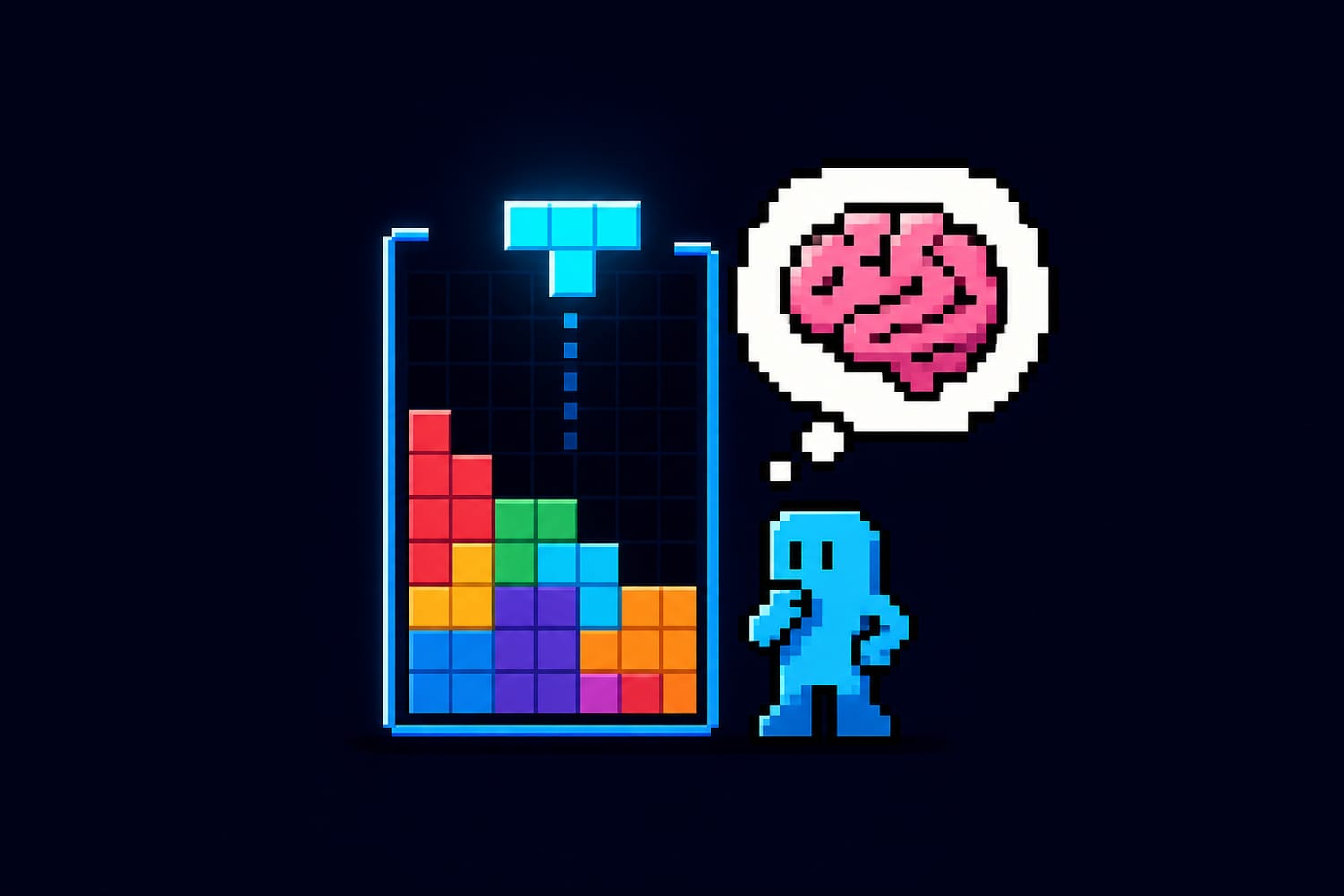
How Puzzle Games Build Metacognition: Thinking About Your Thinking
Why “Thinking About Your Thinking” Matters
When you solve a puzzle, you are not only looking for the next move, matching a pattern, or testing a strategy. You are also doing something deeper: watching your own mind work. You notice when you are stuck. You ask, “What am I missing?” You rethink an assumption. You decide whether to keep trying, take a break, or start over.
That skill is called metacognition, often described as “thinking about your thinking.” It is the ability to understand, monitor, and guide your own thought processes. Metacognition helps you learn more effectively, solve problems more calmly, and make better decisions in everyday life.
Puzzle games are a fun and accessible way to practice metacognition because they give your brain clear goals, immediate feedback, and safe opportunities to make mistakes. Whether you enjoy crosswords, sudoku, jigsaw puzzles, logic grids, word games, number puzzles, or pattern-matching games, each challenge invites you to reflect on how you think—not just what answer you choose.
What Is Metacognition?
Metacognition has two main parts:
Metacognitive knowledge — what you know about how you think and learn.
For example, you might know that you solve word puzzles better in the morning, or that you tend to rush when a timer is running.Metacognitive regulation — how you control and adjust your thinking.
This includes planning, monitoring your progress, checking your work, changing strategies, and evaluating results.
In simple terms, metacognition is the mental habit of asking questions like:
- What is the problem asking me to do?
- What strategies have worked before?
- Am I making progress?
- Did I make an assumption too quickly?
- Should I try a different approach?
- What can I learn from this mistake?
These questions are useful in school, work, relationships, hobbies, and daily decision-making. Puzzle games create a playful environment where these questions arise naturally.
How Puzzle Games Train Self-Awareness
Many puzzle games begin with uncertainty. You may not know the answer right away, and that is part of the fun. This uncertainty encourages self-awareness because you have to notice what you understand and what you do not understand yet.
For example, in a sudoku puzzle, you might scan a row and think, “I know this square cannot be 4 or 7, but I’m not sure what it is.” That moment is metacognitive. You are identifying the limits of your current knowledge.
In a crossword, you may recognize that you are guessing based on only one clue. A more reflective solver might pause and say, “I should check the crossing words before writing this in.” Again, that is metacognition in action.
This kind of awareness matters because learning is not just about getting answers. It is also about knowing how confident you should be in those answers. Puzzle games help players practice confidence calibration: learning when to trust an idea, when to test it, and when to hold off.
Planning Before You Play
One of the most important parts of metacognition is planning. Before jumping into a puzzle, skilled players often take a moment to understand the structure of the challenge.
In a jigsaw puzzle, planning might mean sorting edge pieces first, grouping similar colors, or studying the picture on the box. In a word puzzle, it might mean scanning for short words, common prefixes, or familiar letter patterns. In a logic puzzle, it might mean reading all clues before filling anything in.
Planning does not guarantee instant success, but it gives your thinking direction. It also reduces random guessing. Instead of reacting to each moment, you begin with a strategy.
This habit transfers well to everyday life. Before writing an essay, planning helps organize ideas. Before shopping, planning helps avoid forgetting items. Before starting a project, planning helps identify tools, steps, and possible obstacles. Puzzle games make planning feel less like a chore and more like part of the adventure.
Monitoring Progress While Solving
Metacognition is not only something you do at the beginning or end of a puzzle. It also happens during the process.
As you play, you monitor your progress by asking:
- Is this strategy working?
- Am I getting closer to the solution?
- Have I checked this area already?
- Am I repeating the same mistake?
- Do I need to slow down?
Puzzle games provide frequent feedback. A piece either fits or it does not. A number creates a conflict or it does not. A word matches the clue and crossing letters—or it fails. This feedback helps players adjust their thinking in real time.
Monitoring is especially important when a puzzle becomes frustrating. Without metacognition, frustration can lead to random guessing or giving up too soon. With metacognition, frustration becomes information. It might mean you need a new strategy, a short break, or a fresh look at the puzzle.
This is one reason puzzles can support emotional regulation. They give players a safe place to experience challenge, notice frustration, and practice responding thoughtfully.
Learning From Mistakes
Mistakes are not just allowed in puzzle games—they are often essential. A wrong answer can reveal something important. A misplaced puzzle piece shows that two shapes or colors are not as similar as they seemed. An incorrect sudoku number can expose a hidden assumption. A failed word guess can point you toward a better interpretation of the clue.
Metacognitive players learn to treat mistakes as clues rather than failures. Instead of thinking, “I’m bad at this,” they ask, “What did this mistake teach me?”
That shift is powerful. It encourages a growth mindset: the belief that skills can improve through effort, strategies, and learning. Puzzle games naturally reward persistence, but they also reward reflection. Simply trying again may help, but trying again with a better understanding helps even more.
For children, this can build patience and resilience. For adults, it can reinforce flexible thinking. For older adults, puzzles may provide enjoyable cognitive engagement, though it is important to be accurate: puzzles are not a guaranteed way to prevent cognitive decline or disease. They are, however, a meaningful way to stay mentally active and practice useful thinking skills.
Switching Strategies When You Get Stuck
Everyone gets stuck. The difference between a beginner and an experienced puzzle solver is not that experts never struggle. It is that they often know what to do when struggle appears.
Strategy switching is a key metacognitive skill. It means recognizing that your current approach is not working and choosing another one.
For example:
- In a crossword, you might skip a hard clue and return later.
- In sudoku, you might stop focusing on rows and examine boxes instead.
- In a jigsaw puzzle, you might move from color sorting to shape sorting.
- In a word game, you might look for smaller words inside larger ones.
- In a matching game, you might slow down and focus on one section at a time.
This flexibility helps prevent mental tunnel vision. Sometimes the brain becomes attached to one path simply because it has already spent time on it. Metacognition helps you step back and say, “There may be another way.”
In daily life, the same skill is valuable. If a study method is not helping, try a new one. If a conversation is going badly, change your approach. If a work task feels blocked, break it into smaller parts. Puzzle games give you repeated practice in adapting without making the stakes feel overwhelming.
Building Attention and Working Memory
Puzzle games often require attention and working memory. Attention helps you focus on relevant details, while working memory helps you hold and use information for a short time.
In a logic puzzle, you may need to remember that one character cannot be in a certain place while comparing several clues. In a word game, you may hold possible letters in mind while testing combinations. In a pattern puzzle, you may track shapes, colors, positions, or sequences.
Metacognition strengthens this process because it helps you decide what deserves attention. Instead of trying to remember everything at once, you learn to focus on what matters most.
For example, a thoughtful player might say, “I don’t need to solve the whole puzzle right now. I only need to find one certain move.” That kind of mental organization reduces overload.
This is especially helpful for learners of all ages. When people understand how their attention works, they can create better conditions for thinking: fewer distractions, clearer goals, and more manageable steps.
Confidence, Patience, and Healthy Challenge
A well-designed puzzle offers a balance between difficulty and possibility. If it is too easy, it becomes boring. If it is too hard, it may feel discouraging. The best puzzles often sit in the middle: challenging enough to require effort, but fair enough to reward careful thought.
This balance helps build healthy confidence. Each solved puzzle provides a sense of achievement. More importantly, the process teaches that confidence does not have to come from knowing everything immediately. It can come from knowing how to proceed when you do not yet know the answer.
That lesson is valuable far beyond games. Many real-life problems do not come with instant solutions. Metacognition helps people stay calm, evaluate options, and continue step by step.
Patience also grows through puzzles. Players learn that progress may be gradual. A puzzle can look impossible at first, then slowly become clearer as small discoveries connect. This experience can remind us that understanding often develops over time.
Why Puzzle Games Work for Many Ages
One of the wonderful things about puzzle games is their flexibility. They can be simple enough for young children and complex enough for expert solvers. They can be played alone, with friends, in classrooms, during breaks, or as a relaxing evening activity.
For children, puzzles can encourage planning, focus, vocabulary, pattern recognition, and persistence. For teenagers, they can support problem-solving and self-monitoring skills useful in school and hobbies. For adults, they can offer enjoyable mental challenge and a break from passive screen time. For older adults, puzzles can provide social connection, routine, and cognitive engagement.
The key is choosing puzzles that match the player’s interests and ability level. A positive experience matters. Puzzle games should feel inviting, not like a test. The goal is not perfection; it is thoughtful engagement.
Different puzzle types may exercise different skills. Word puzzles emphasize language and association. Number puzzles emphasize logic and pattern constraints. Jigsaws emphasize visual-spatial reasoning. Memory games emphasize attention and recall. Variety keeps the experience fresh and encourages flexible thinking.
Turning Puzzle Play Into Metacognitive Practice
You do not need to turn every puzzle session into a lesson. Fun is already a strong reason to play. But if you want to build metacognition more intentionally, try adding a few reflection habits.
Before playing, ask:
- What is my goal?
- What strategy will I try first?
- What clues or patterns should I look for?
During play, ask:
- Am I making progress?
- What have I ruled out?
- Where am I guessing instead of reasoning?
After finishing, ask:
- What worked well?
- Where did I get stuck?
- What would I try differently next time?
These questions take only a moment, but they train the mind to become more aware and adaptable. Over time, you may notice that you approach puzzles—and problems in general—with more patience and clarity.
The Bigger Benefit: A More Reflective Mind
Puzzle games are entertaining, but their benefits can go beyond entertainment. They invite us to slow down, observe our thinking, test ideas, learn from mistakes, and adjust strategies. Those are the building blocks of metacognition.
The beauty of puzzles is that they make deep mental skills feel playful. You do not need special equipment or advanced knowledge to begin. You only need curiosity and a willingness to think one step at a time.
At Puzzles Arcade, every puzzle is more than a challenge to solve. It is a chance to practice noticing how your mind works. And the more you understand your thinking, the better prepared you are to learn, adapt, and solve problems—both inside and outside the game.

