
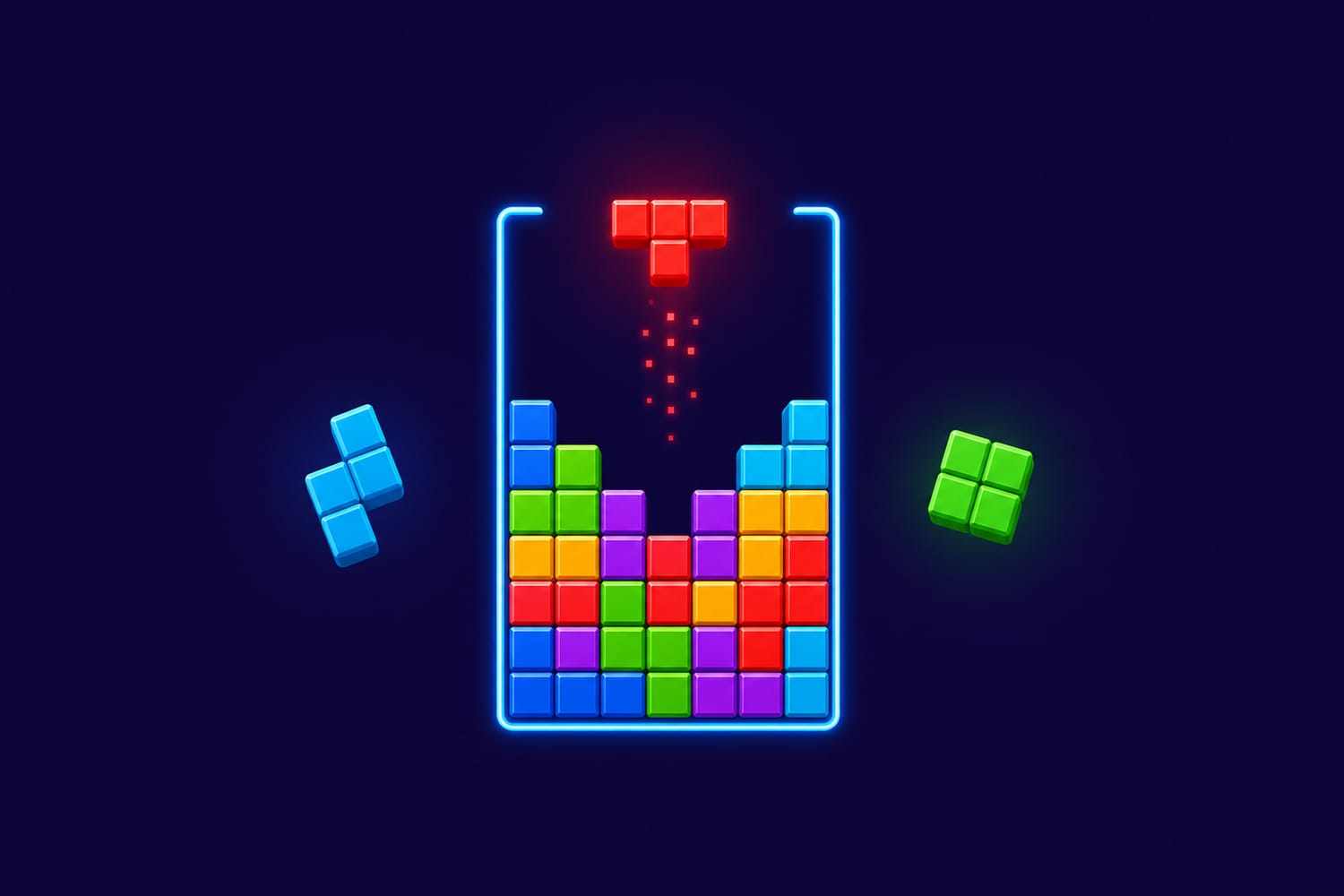
Why Randomness Makes Puzzle Games Feel Fresh: The Design Behind Replayability
The Little Surprise Machine Inside Puzzle Games
Puzzle games are often built on clear rules: match three gems, fit falling blocks, uncover safe squares, slide tiles into place, connect colors, or solve a grid with logic. At first glance, those rules seem fixed. So why can the same puzzle game stay fun for hours, months, or even years?
One major answer is randomness.
Randomness is the design ingredient that makes a familiar game feel new again. It changes the next piece, the next board, the next clue, the next enemy pattern, or the next layout. It gives players a fresh problem to solve without requiring the game designer to handcraft every single possible challenge.
But randomness is not just “chaos.” In great puzzle games, randomness is carefully shaped. Designers use it to create variety, tension, fairness, surprise, and replayability. The best random systems feel unpredictable enough to be exciting, but controlled enough to feel fair.
That balance is one of the hidden arts behind puzzle game design.
What Randomness Means in Game Design
In everyday life, randomness means something happens without a predictable pattern. A coin toss, a shuffled deck, or a dice roll are classic examples. In games, randomness usually comes from a computer system called a random number generator, often shortened to RNG.
Most computer-generated randomness is actually “pseudo-random.” That means the computer follows a mathematical process that produces results that appear random to players. This is normal and widely used in games, simulations, and software. To the player, the important part is that the outcome feels unpredictable.
In puzzle games, randomness can appear in many ways:
- The order of pieces in a falling-block game
- The layout of a puzzle board
- The placement of obstacles
- The colors or symbols that appear next
- The arrangement of mines, tiles, or hidden objects
- The sequence of challenges in a daily puzzle mode
Randomness gives designers a way to create many possible situations from a smaller set of rules. A game does not need millions of handcrafted levels if its systems can generate interesting puzzles again and again.
Why Randomness Makes Games Replayable
Replayability means a game remains fun after you have played it once. Randomness supports replayability because it prevents every session from unfolding the same way.
Imagine a falling-block puzzle where the pieces always arrived in the exact same order. Once players learned the best moves, the game would become more like memorizing a script than solving a live problem. By changing the order, the game asks players to adapt. The rules stay familiar, but the situation is different.
That is the magic: randomness turns a puzzle from a single question into a question generator.
This is why games with simple rules can have enormous depth. Chess itself is not random once the game begins, but many digital puzzle games use randomness to create a similar feeling of endless possibility: each new board is a new position, and each decision matters because the future is uncertain.
Replayability also comes from curiosity. Players wonder:
- What will happen next time?
- Can I get a better score with a different board?
- Will I find a rare pattern?
- Can I recover from a difficult start?
- What strategy works best across many random situations?
Randomness makes players test skill over time, not just memory.
Good Randomness vs. Bad Randomness
Not all randomness improves a game. Good randomness creates interesting decisions. Bad randomness makes players feel powerless.
For example, if a game gives you random pieces, but every piece can be used in clever ways, the randomness feels exciting. If the game gives you a random situation where no good move exists, it may feel unfair.
Good randomness often has three qualities:
It creates variety
The game feels different from round to round.It preserves player agency
Players still feel their choices matter.It avoids extreme unfairness
The game does not regularly punish players with impossible situations.
Many famous puzzle games use “controlled randomness.” Instead of choosing anything at any time, the game chooses from a balanced pool of possibilities.
A good example is the “bag” system used in many modern falling-block games. Rather than selecting each piece completely independently, the game may shuffle a set containing one of each piece type, then deal them out before reshuffling. This reduces the chance of long, frustrating droughts where an important piece never appears. Players still cannot predict the exact order, but the system is fairer than pure randomness.
This is a key lesson: randomness often feels best when it is guided.
The Player’s Brain Loves Fresh Patterns
Humans are pattern-finding creatures. We enjoy spotting order, predicting outcomes, and improving through practice. Puzzle games activate that part of the brain by giving us rules we can understand and situations we can analyze.
Randomness keeps those patterns from becoming stale.
When a board changes, your brain has to scan again. When a new set of tiles appears, you must reconsider your plan. When the next piece is unexpected, you adjust. This constant process of prediction and adaptation is a big part of what makes puzzle games satisfying.
A well-designed puzzle game often creates a loop like this:
- Look at the current situation
- Make a plan
- Take an action
- See the result
- Adapt to new information
- Try to improve
Randomness adds energy to that loop. It creates small surprises that keep your attention alive.
This is also why randomness works well for all ages. Younger players may enjoy the surprise and discovery. Experienced players may enjoy the challenge of optimizing decisions under uncertainty. The same system can entertain different skill levels in different ways.
Random Boards, Procedural Generation, and Infinite Puzzles
One powerful use of randomness is procedural generation. This means a game uses rules and algorithms to create content automatically. Instead of a designer manually placing every tile or obstacle, the game generates layouts according to a system.
Procedural generation can create:
- Random mazes
- Tile grids
- Logic puzzles
- Word boards
- Number challenges
- Object placements
- Level layouts
However, generating a puzzle is not as simple as throwing random pieces onto a board. A puzzle must usually be solvable, understandable, and interesting.
For example, a randomly generated maze should have a valid path from start to finish. A number puzzle should have a solution. A matching game should avoid starting with a board that instantly ends the round. A hidden-object or mine-placement game may need rules to prevent the first move from being unfair.
Designers often add checks after generation. The game may create a random board, test whether it can be solved, then accept it or generate a new one. In some games, the generator is built in a way that guarantees solvability from the beginning.
This is one reason puzzle design is both creative and technical. A good generator is like a puzzle-making machine, but it still needs thoughtful rules.
Fairness: The Secret Ingredient
Players are usually comfortable losing if they believe the game was fair. In fact, many players enjoy hard puzzle games when the challenge feels honest. Randomness becomes frustrating when it seems to break that trust.
Fairness does not always mean the game is easy. It means the player had meaningful choices.
Designers use many tools to make random systems feel fair:
- Preview information: Showing the next piece or upcoming tile
- Limited randomness: Choosing from a controlled set of outcomes
- Difficulty smoothing: Avoiding sudden impossible spikes
- Recovery options: Giving players ways to escape bad situations
- Solvability checks: Ensuring generated puzzles have valid solutions
- Balanced probability: Making rare events rare, not constant
Consider a match-style puzzle game. If new pieces fall randomly, the game can create exciting chain reactions. But if the board constantly reshuffles into hopeless patterns, players may feel the game is playing itself. Designers must balance surprise with control.
This is why some games quietly adjust probabilities. They may reduce the chance of repeated bad outcomes or prevent certain impossible arrangements. The goal is not to trick the player, but to preserve fun.
Randomness Creates Stories
Even simple puzzle games can produce memorable stories because randomness creates unusual situations.
You might remember the time you survived with one move left. Or when a lucky cascade cleared half the board. Or when a difficult layout forced you to invent a new strategy. These moments feel personal because they were not scripted exactly the same way for everyone.
Randomness gives players stories like:
- “I thought I was doomed, but then the perfect piece appeared.”
- “The board looked easy, but one bad choice trapped me.”
- “I got a strange layout and found a clever solution.”
- “I beat my high score because I adapted better than before.”
These small stories are important. They help players connect emotionally to a game. Even when the graphics are simple and the rules are easy to learn, the experience can feel dramatic because the outcome is uncertain.
That uncertainty is a big part of play.
Skill Still Matters
A common misunderstanding is that randomness makes games “just luck.” In well-designed puzzle games, randomness does not replace skill. It tests skill in a different way.
Skill in a random puzzle game often means:
- Making good decisions with incomplete information
- Preparing for multiple possible outcomes
- Managing risk
- Staying calm after surprises
- Recognizing useful patterns quickly
- Recovering from mistakes
- Choosing flexible moves instead of fragile plans
For example, a beginner might only react to the current board. An expert thinks ahead: “What future pieces could help me? What future pieces could hurt me? How can I keep my options open?”
This is why randomness can make a game more strategic, not less. It rewards players who understand probabilities, plan for uncertainty, and adapt when the situation changes.
Luck may affect one round, but skill shows across many rounds.
The Balance Between Comfort and Surprise
The most replayable puzzle games often combine two feelings: comfort and surprise.
The comfort comes from familiar rules. You know how blocks fall, how tiles match, how numbers combine, or how clues work. This makes the game easy to return to.
The surprise comes from randomness. The next board is different. The next piece changes your plan. The next puzzle asks a new question.
Too much comfort, and the game becomes repetitive. Too much surprise, and the game becomes confusing or unfair. The designer’s job is to tune the balance.
That tuning may involve probability, pacing, difficulty curves, and testing. Designers watch how players respond. Are they excited? Frustrated? Bored? Confused? Do they blame themselves when they lose, or do they blame the game? These reactions help designers refine the random systems.
Great randomness is often invisible. Players may not notice the math behind it. They simply feel that the game is fresh, fair, and fun.
Why Replayable Puzzle Games Endure
Puzzle games have existed in many forms for centuries, from paper puzzles and board games to arcade classics and mobile apps. Randomness has helped many of them remain timeless because it allows simple rules to produce endless variety.
A replayable puzzle game does not need to surprise you with brand-new rules every minute. Instead, it can surprise you by recombining familiar elements in new ways. That is the beauty of randomness in design.
It keeps players curious. It keeps strategies evolving. It makes victories feel earned and losses feel like invitations to try again.
Behind the games we love, randomness is not just a dice roll. It is a carefully designed system that turns rules into possibilities. And when it is done well, every new round feels like opening a small puzzle box you have never seen before.

