
Why Match-3 Games Are So Satisfying: The Design Behind Cascades, Combos, and Flow
The Small Swap That Starts a Big Reaction
Match-3 games look simple at first: swap two neighboring tiles, line up three or more of the same kind, and watch them disappear. But behind that easy-to-understand action is a surprisingly rich design system. Every sparkle, cascade, combo, sound effect, and level goal is carefully tuned to make the game feel satisfying.
The basic idea is wonderfully accessible. You do not need a long tutorial or complicated controls. If you can recognize colors and patterns, you can play. That is one reason match-3 games are popular with such a wide range of players. They offer quick fun, but they also create moments of strategy, surprise, and achievement.
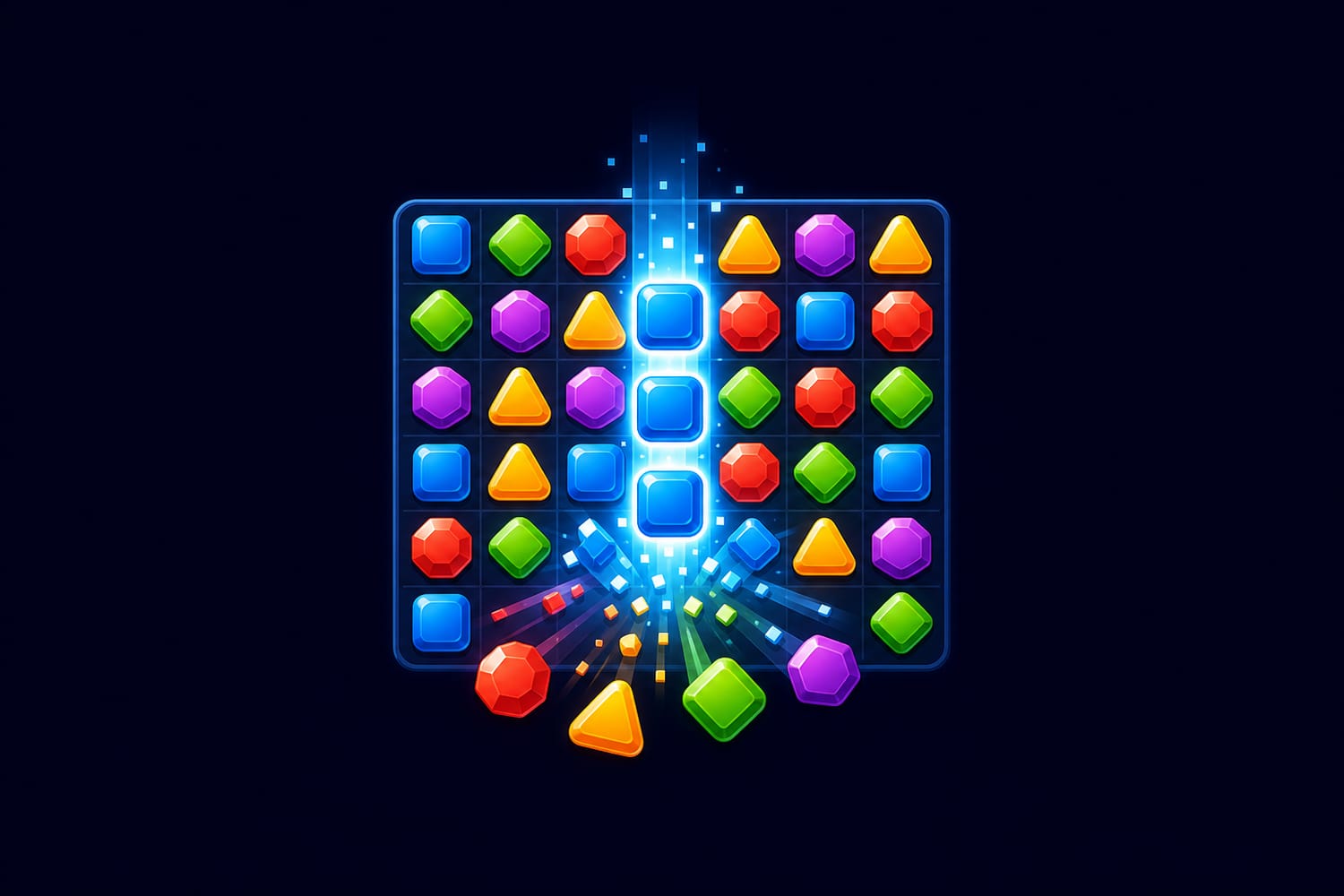
The magic comes from how the game responds after each move. A simple swap can clear three tiles. Those tiles might make space for new ones to fall. The falling pieces might create another match. Then another. Suddenly, one small decision has created a chain reaction. This is the heart of match-3 satisfaction: the feeling that a simple action can produce a delightful result.
Why Matching Feels Good
Humans are naturally drawn to patterns. We like sorting, grouping, organizing, and completing things. A match-3 board gives the brain a colorful pattern puzzle, and every successful match provides a tiny sense of completion.
When you spot three matching gems, candies, fruits, or shapes, your brain gets a clear problem-and-solution moment. The problem is visual: “Where is a match?” The solution is physical: “Swap these two pieces.” The reward is immediate: the pieces vanish, points appear, and the board changes.
That fast feedback loop is extremely important. Good match-3 games do not make players wait long to see the result of their actions. The board responds instantly with movement, sound, color, and score changes. Even if the move is small, the game makes it feel meaningful.
This is related to a concept often used in game design: feedback. Feedback is how a game tells the player, “Yes, something happened.” In match-3 games, feedback usually comes through animations, particle effects, musical tones, screen shakes, score pop-ups, and special tile effects. The more readable and satisfying the feedback, the more rewarding the match feels.
Cascades: The Joy of Falling Pieces
A cascade happens when matched tiles disappear and new tiles fall into the empty spaces, possibly creating new matches automatically. Cascades are one of the biggest reasons match-3 games feel exciting.
They introduce surprise. You make one move, but the board continues to act after your move is complete. This creates anticipation: “Will the falling pieces make another match?” When they do, it feels like a bonus. When several cascades happen in a row, the game can feel almost magical.
Cascades also make the board feel alive. Without gravity and falling pieces, a match-3 game would be much more static. You would make a move, remove some tiles, and then simply continue. But with cascades, the board reshapes itself. New opportunities appear. Old plans may change. The player is constantly reading a moving puzzle.
From a design perspective, cascades must be balanced carefully. If they happen too rarely, the game may feel flat. If they happen constantly, the player may feel like the game is playing itself. The most satisfying design usually sits somewhere in the middle: frequent enough to surprise and delight, but not so frequent that player choices feel unimportant.
Cascades also help create emotional variety. Some moves are calm and predictable. Others set off a chain reaction that clears half the board. This rhythm of quiet planning followed by explosive payoff keeps players engaged.
Combos and Special Tiles: Turning Strategy Into Spectacle
Most match-3 games go beyond simple three-tile matches. Matching four, five, or special shapes often creates power-ups: striped tiles, wrapped tiles, bombs, rockets, rainbow pieces, or other special objects depending on the game’s theme.
These special tiles are important because they reward skillful pattern recognition. A basic match clears a few pieces, but a larger or more difficult match gives the player a stronger tool. This creates a satisfying sense of mastery. The player learns not just to make any match, but to look for better matches.
Combos happen when power-ups are activated together or in sequence. For example, combining two special tiles might clear rows, columns, colors, or large sections of the board. These moments feel powerful because they are both strategic and spectacular. The player sees their planning transformed into a dramatic effect.
Combos also create memorable moments. You may not remember every ordinary match you made, but you might remember the time you combined two powerful tiles and cleared the final objective with one move remaining. These dramatic turns are part of what makes match-3 games so shareable and replayable.
Good combo design is easy to understand but deep enough to explore. A player should quickly learn, “This special tile clears a row,” or “This one removes all tiles of one color.” Over time, they discover more advanced possibilities, like setting up multiple power-ups close together or saving a special tile for the perfect moment.
Flow: The Feeling of Being Completely Engaged
One of the most important ideas in game design is flow. Flow is a state where a person becomes fully absorbed in an activity. The challenge feels neither too easy nor too hard. The goals are clear. Feedback is immediate. Time may seem to pass quickly.
Match-3 games are especially good at creating flow because they offer constant small decisions. The player is always scanning the board, comparing options, and choosing a move. The goals are usually clear: collect certain tiles, clear obstacles, bring objects to the bottom, or reach a score. Each move provides instant feedback, and the board quickly presents a new puzzle.
Flow depends heavily on difficulty. If a level is too easy, the player may become bored. If it is too hard, the player may become frustrated. The best match-3 levels gradually introduce new mechanics, obstacles, and goals so players feel challenged but not overwhelmed.
This is why many match-3 games start with simple boards and slowly add complexity. Early levels teach the basics: matching, cascades, and special tiles. Later levels introduce blockers, limited moves, layered objectives, and unusual board shapes. The player grows more skilled as the game grows more complex.
The Power of Limited Moves
Many match-3 games use limited moves instead of a timer. This design choice changes the experience. A timer creates pressure and speed. Limited moves create planning and tension.
When moves are limited, every swap matters. Players must think about efficiency: “Will this move help me reach the goal?” A simple match might be useful, but a move that creates a special tile or opens a blocked area may be much better. This encourages players to look ahead.
Limited moves also create exciting endings. If you have two moves left and one objective remaining, every decision becomes dramatic. A lucky cascade or well-placed combo can turn near-defeat into victory. That last-move win is one of the most satisfying experiences in puzzle games.
However, limited moves must be designed fairly. Players should usually feel that success comes from smart decisions, not pure luck. Randomness is part of match-3 games because new tiles fall into the board, but strong level design gives players enough control to make meaningful choices.
Randomness, Luck, and Fairness
Match-3 games rely on randomness, especially when new pieces enter the board. Randomness keeps levels fresh. If the same tiles appeared in the same order every time, the puzzle might become predictable. Randomness gives each attempt a slightly different story.
But too much randomness can feel unfair. If the board gives no useful matches or the needed pieces never appear, players may feel helpless. Designers must balance chance with control.
Many games do this through hidden systems that manage tile generation. These systems may reduce the chance of impossible boards, prevent too many unhelpful pieces, or ensure that new matches are possible. The goal is not to remove randomness, but to make randomness feel fair and fun.
Fairness is also about communication. A player should understand what the level is asking them to do. If an obstacle blocks the board, the game should show how it can be cleared. If a special tile behaves in a certain way, its effect should be consistent. Clear rules help players trust the game.
Obstacles and Goals: Keeping the Puzzle Fresh
If match-3 games were only about matching colors, they might become repetitive. Obstacles and goals add variety.
Obstacles can include crates, ice, chains, jelly, stones, locks, or other themed blockers. They change how the player reads the board. A match might not just clear tiles; it might damage a blocker, open a path, or release a trapped object. This gives every level a different personality.
Goals also shape strategy. A level that asks you to collect blue tiles plays differently from one that asks you to clear blockers. A level where objects must fall to the bottom encourages vertical thinking. A level with spreading hazards may require quick containment. These different goals keep players from using the same strategy every time.
Good level design usually combines familiar mechanics with a small twist. The player recognizes the basic rules, but the board shape, goal, or obstacle arrangement asks them to think in a new way. This blend of comfort and novelty is a major reason match-3 games remain engaging across many levels.
Sound, Animation, and the “Juicy” Feel
Game designers sometimes use the word “juice” to describe extra polish that makes actions feel more satisfying. In match-3 games, juice is everywhere.
When tiles pop, bounce, glow, spin, or sparkle, the game feels more responsive. When a combo triggers a rising musical effect, the player feels the excitement building. When a big power-up shakes the board or sends pieces flying, the move feels powerful.
These effects are not just decoration. They help players understand what is happening. Animation shows which tiles are moving, which pieces are being cleared, and where new pieces are entering. Sound can confirm success, signal a combo, or warn that moves are running low.
The key is clarity. Effects should be exciting without making the board confusing. If too much is happening at once, players may lose track of the results. The best match-3 games use polish to support understanding as well as emotion.
Why “Almost Winning” Makes Us Try Again
Match-3 games often create close outcomes: one jelly left, one ingredient near the bottom, one blocker almost cleared. These near-wins can be powerful motivators. When players feel they were close, they often believe they can succeed next time with a better strategy or a little more luck.
This is part of the retry appeal. A failed attempt is not always discouraging if it teaches the player something. Maybe they realize they focused on the wrong area of the board. Maybe they used a power-up too early. Maybe they now understand the obstacle better.
For this to feel positive, the game must make progress visible. Players should see how close they came and understand what they might do differently. A good level invites another try because the goal feels reachable.
The Lasting Appeal of Match-3 Design
Match-3 games are satisfying because they combine simple rules with rich reactions. They are easy to learn, but they can support clever planning. They offer quick rewards, but also long-term mastery. They use randomness for surprise, but structure for fairness. They turn small swaps into cascades, combos, and memorable victories.
At their best, match-3 games create a cheerful rhythm: notice a pattern, make a move, enjoy the result, rethink the board, and try again. Every cascade adds surprise. Every combo adds power. Every close finish adds drama. And every successful level gives the player a satisfying sense of completion.
That is the design brilliance behind the genre. A match-3 game may look like a board full of colorful pieces, but underneath is a carefully crafted system of feedback, challenge, reward, and flow. It is a reminder that great game design does not always need complicated controls or huge worlds. Sometimes, all it takes is one smart swap—and the joy of watching everything fall into place.

