
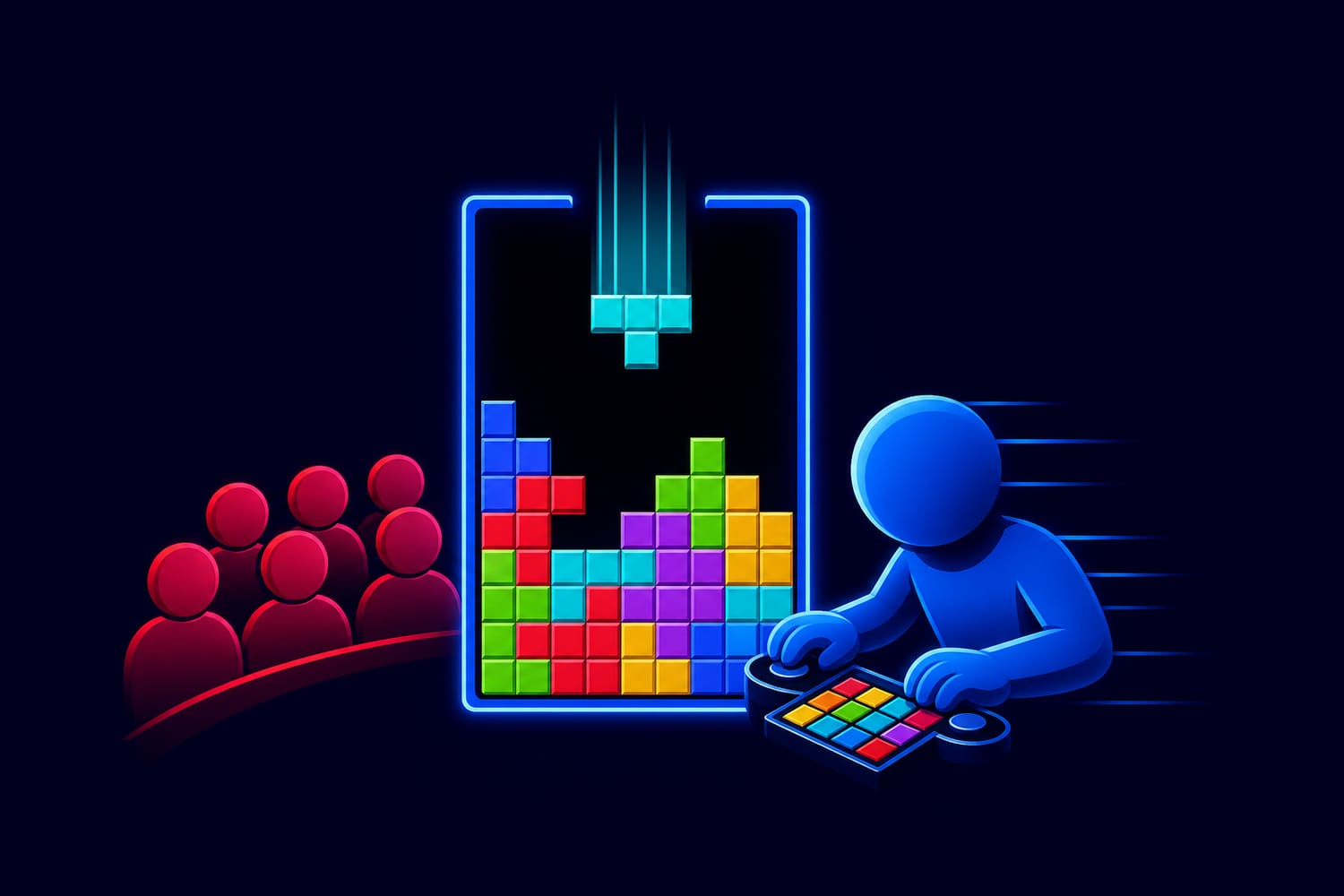
Inside Puzzle Speedruns: How Solvers Turn Brain Games into Spectator Sports
The Moment a Puzzle Becomes a Race
A puzzle is usually thought of as a quiet thing: a crossword at the breakfast table, a Sudoku on a train ride, a logic grid solved with a pencil, or a digital puzzle game played after school or work. But in the world of puzzle speedruns, that quiet experience becomes something surprisingly thrilling. The question changes from “Can you solve it?” to “How fast can you solve it under pressure?”
Puzzle speedrunning is the practice of completing puzzles, puzzle games, or puzzle sets as quickly as possible while following agreed-upon rules. Like video game speedrunning, it combines mastery, strategy, memory, quick decision-making, and calm performance under pressure. The result can be fascinating to watch—even for people who have never solved the puzzle themselves.
Unlike a traditional race, the “track” is often invisible. The action happens inside the solver’s mind: spotting patterns, choosing shortcuts, testing possibilities, and avoiding traps. A great puzzle speedrun lets spectators see thinking at high speed, turning brain games into a kind of mental sport.
What Counts as a Puzzle Speedrun?
Puzzle speedruns can take many forms. Some involve paper-style puzzles, such as Sudoku, crosswords, nonograms, KenKen, or logic puzzles. Others happen inside video games built around problem-solving, such as The Witness, Portal, Baba Is You, Tetris, Minesweeper, or escape-room-style games. Some events even use puzzle hunts, where teams solve interconnected clues to uncover a final answer.
The main requirement is simple: there must be a clear goal and a way to measure time. For example:
- Complete one Sudoku puzzle as fast as possible.
- Finish a set of crossword clues without errors.
- Solve every level in a puzzle video game.
- Clear a Minesweeper board with a specific difficulty.
- Beat a puzzle game category, such as “any%” or “100%.”
In speedrunning, “any%” usually means finishing the game as fast as possible by any allowed method, while “100%” means completing all required content. Puzzle games may also have special categories, such as glitchless runs, random seed runs, daily challenge runs, or competition formats where everyone solves the same puzzle at the same time.
Why Watching Someone Solve Fast Is So Exciting
At first, watching a puzzle speedrun might sound less exciting than watching a platform game or racing game. There are no explosions, no roaring engines, and often no dramatic animation. But the excitement comes from a different place: anticipation.
Spectators know that one small mistake can cost a runner precious seconds—or ruin an entire attempt. A Sudoku solver who places a wrong digit may have to unwind several steps. A crossword solver may lose time on one stubborn clue. A Minesweeper player might face a risky guess. A puzzle game runner may forget a route, mistime an input, or choose a slower solution path.
There is also the thrill of insight. Viewers get to see an expert notice something instantly that would take most people minutes to find. A speedrunner may glance at a grid and immediately know which square must be filled. They may solve a clue from only two letters. They may skip a long intended solution by understanding the game’s rules deeply enough to create a shortcut.
That “How did they see that?” feeling is one of the great joys of puzzle speedruns. It invites curiosity rather than just amazement. A good commentator or runner can explain the logic, turning a fast performance into a live lesson.
The Skills Behind the Speed
Puzzle speedrunning is not just about being “smart” or having quick fingers. It depends on a blend of skills that can be trained over time.
Pattern recognition is one of the biggest. Experienced Sudoku solvers recognize common structures, such as singles, pairs, triples, and more advanced techniques. Crossword speedsolvers build mental libraries of clue styles, wordplay tricks, abbreviations, and common answers. Puzzle game runners learn level layouts and solution patterns until they become second nature.
Memory also matters. Many puzzle video game speedruns use practiced routes. The runner memorizes the order of levels, puzzle solutions, movement paths, and menu inputs. In games with random elements, memory still helps, but the runner also needs adaptability.
Decision-making under pressure is another key skill. A solver must constantly choose where to look next. Should they keep working on the hard clue, or move on? Should they use a safe but slower puzzle technique, or attempt a faster risky one? Great speedrunners are often great at knowing when to change plans.
Finally, there is emotional control. Speedruns are timed, public, and easy to derail. Staying calm after a mistake can be the difference between a personal best and an abandoned run. The best solvers learn to recover quickly, because frustration usually wastes more time than the mistake itself.
Routes, Seeds, and the Difference Between Solving and Performing
A casual puzzler often solves in a flexible, wandering way. They try things, pause, think, erase, restart, and enjoy the process. A speedrunner must transform that process into a performance.
For fixed puzzles, such as a specific puzzle game level, runners often create routes. A route is a planned sequence of actions designed to finish quickly. In a game like Portal, routing may involve movement tricks, physics knowledge, and careful timing. In a puzzle game like The Witness, routing may include knowing the order of panels and the fastest way to move between them.
For randomized puzzles, the challenge is different. In Minesweeper, Sudoku apps, or daily puzzle competitions, the solver cannot simply memorize the answer. Instead, they train methods that work across many possible boards. These runs are often especially impressive because the audience can see real-time reasoning.
The term “seed” is important in many digital puzzles. A seed is a number or code used by a program to generate a particular puzzle or layout. If everyone uses the same seed, they get the same puzzle, making comparison fair. If seeds are random, categories may track averages over many attempts to reduce the effect of luck.
How Communities Keep Runs Fair
For a speedrun to be meaningful, the rules must be clear. Puzzle speedrunning communities often create detailed category rules, timing standards, and verification methods. This is especially important because different versions of a game, different puzzle generators, or different assist settings can change the difficulty.
A Sudoku speedrun might specify the puzzle source, difficulty level, input method, and whether mistakes are allowed to be corrected. A puzzle game speedrun might specify the platform, game version, allowed glitches, and when the timer starts and stops. A crossword competition may require all answers to be correct before the time counts.
Verification can include video recordings, live streams, screenshots, input files, or leaderboard moderators reviewing attempts. In larger speedrunning communities, sites such as Speedrun.com host leaderboards for many games and categories. Puzzle-specific communities may use their own rankings, tournaments, or daily challenge boards.
Fairness does not mean removing all luck. Some puzzle formats naturally include chance, especially randomized boards. Instead, good rules make clear how luck is handled. That could mean using fixed puzzles, averaging multiple runs, separating categories by difficulty, or requiring a minimum number of attempts.
The Role of Commentary and Streaming
Puzzle speedruns become spectator sports partly because of presentation. A silent grid filling up quickly can be impressive, but a well-commentated run can be captivating.
Commentators help the audience understand what the runner is doing and why it matters. They might explain that a Sudoku solver just used a hidden single, that a crossword answer depends on a pun, or that a puzzle game runner is taking a risky shortcut to save five seconds. In tournaments, commentators can compare two solvers side by side, highlighting different strategies.
Streaming platforms also make puzzle speedruns more interactive. Viewers can ask questions, cheer for personal bests, and learn terminology. Some streamers explain their thinking while solving, while others focus deeply during the run and discuss it afterward. Both styles can be valuable: one teaches in real time, and the other shows peak concentration.
Events such as Games Done Quick have helped introduce broad audiences to speedrunning, including puzzle and puzzle-adjacent games. Meanwhile, online puzzle communities host races, daily challenges, and friendly competitions that make speed-solving accessible to people around the world.
Why Puzzle Speedruns Are Educational
One of the best things about puzzle speedrunning is that it makes learning visible. Viewers can watch expertise develop. They see that fast solvers are not simply guessing; they are using techniques, experience, and structured thinking.
This can be encouraging for beginners. A new Sudoku player might learn to scan rows and columns more efficiently. A crossword fan might begin to recognize clue conventions. A puzzle game player might discover that a level has multiple solutions, and that the fastest one is not always the most obvious.
Puzzle speedruns also teach broader skills: patience, focus, pattern recognition, planning, memory, and resilience. Because mistakes happen often, they show a healthy model of improvement. Runners review failed attempts, identify time losses, and try again. That process is useful far beyond games.
For younger audiences, puzzle speedruns can show that problem-solving is active and exciting. For adults, they can offer a fresh way to enjoy familiar brain games. For experienced puzzlers, they open a new layer of depth: not just solving, but optimizing.
Different Puzzles, Different Spectator Appeals
Not all puzzle speedruns are exciting for the same reason. Each type has its own spectator appeal.
Sudoku speedruns are about logic and scanning efficiency. The audience watches numbers appear in a grid and tries to follow the chain of deductions. High-level solvers can be astonishingly fast, but the best viewing experiences often include explanations of the techniques used.
Crossword speedsolving has a different rhythm. It mixes vocabulary, trivia, wordplay, and cultural knowledge. Watching a crossword solver fly through clues can feel like watching someone hold a conversation with the puzzle’s creator.
Minesweeper speedruns combine logic with probability and risk. Because some boards require guesses, spectators experience suspense: will the click be safe?
Puzzle video game speedruns often include movement, routing, glitches, and mechanical skill alongside problem-solving. These runs can look closer to traditional video game speedruns, but the heart of the challenge is still understanding systems and using them efficiently.
Escape-room and puzzle-hunt races emphasize teamwork. Spectators get to see communication, division of labor, and group problem-solving. A team may split clues among members, combine partial answers, and suddenly discover a hidden connection.
How to Try Puzzle Speedrunning Yourself
You do not need to be an expert to begin. Choose a puzzle you already enjoy, then define a simple goal. For example: “Solve this easy Sudoku as fast as I can without mistakes,” or “Complete the first ten levels of this puzzle game.” Use a timer, record your time, and try again later.
The key is to compare yourself to your past self before comparing yourself to others. Speedrunning is full of world records and elite performances, but most of the fun comes from personal improvement. Saving thirty seconds because you learned a new technique can feel just as rewarding as winning a race.
It also helps to join a community. Look for forums, Discord servers, leaderboards, streams, or puzzle clubs focused on your chosen game or puzzle type. Many experienced solvers enjoy helping newcomers, and community rules can guide you toward fair and interesting categories.
Most importantly, keep the puzzle fun. Speed is only one way to enjoy brain games. Some days you may want to race; other days you may want to relax and solve slowly. Both approaches are valuable.
The Future of Brain Games as Spectator Sports
Puzzle speedruns show that competition does not have to be loud to be exciting. A blank grid, a clever clue, or a mysterious game mechanic can create real drama when time is ticking and the solver is skilled.
As streaming tools improve and puzzle communities grow, speed-solving is likely to become even more watchable. Better overlays can show timers, progress, mistakes, and side-by-side comparisons. Commentators can make advanced techniques understandable. Puzzle creators may even design challenges with spectators in mind, balancing difficulty, fairness, and dramatic moments.
At its best, puzzle speedrunning celebrates curiosity. It turns thinking into performance without losing the joy of discovery. Whether you are a casual puzzler, a competitive player, or someone who simply likes watching experts do amazing things, puzzle speedruns offer a unique kind of excitement: the thrill of a mind moving quickly, clearly, and creatively toward a solution.

