
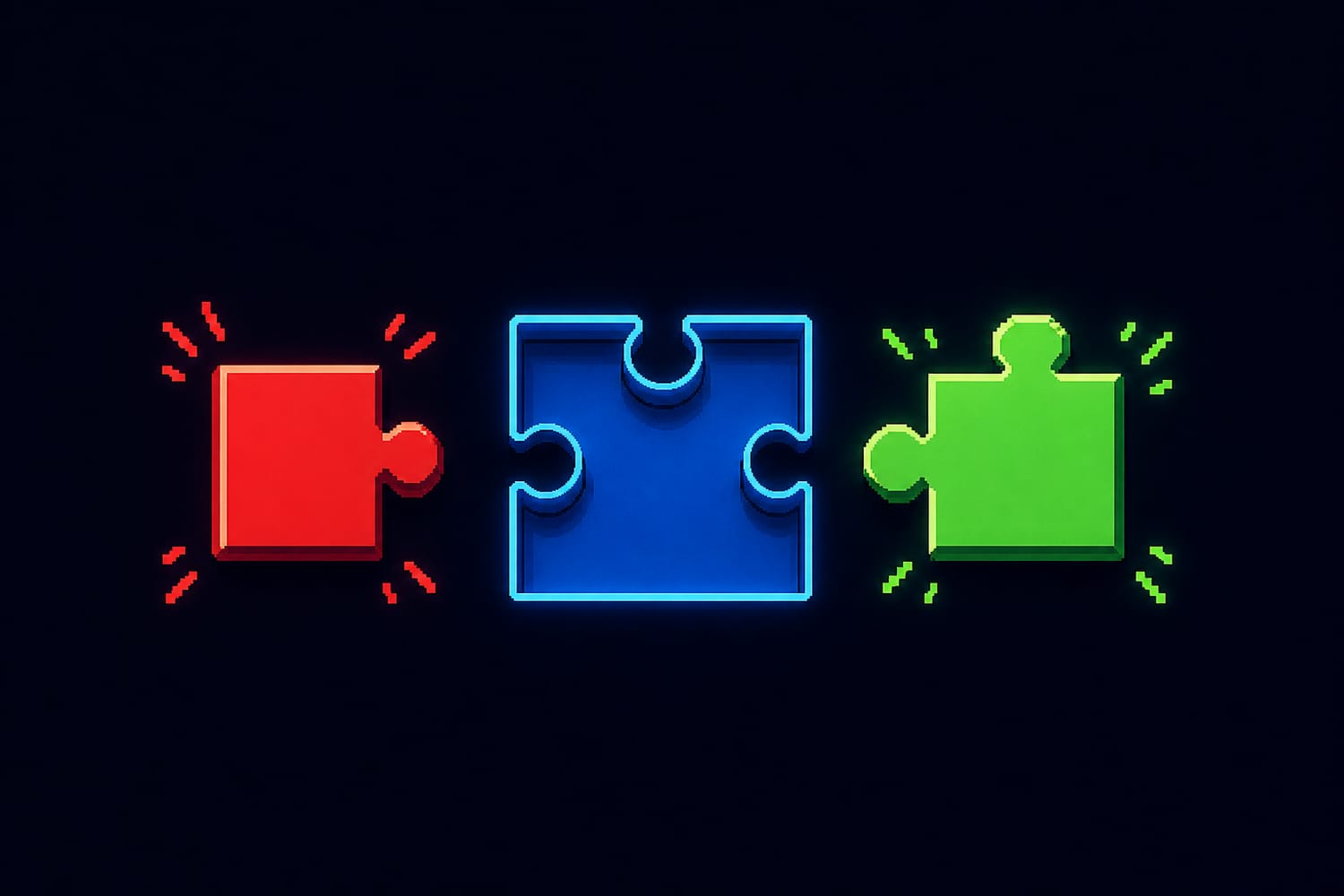
How Jigsaw Puzzle Pieces Get Their Shapes—and Why False Fits Happen
A jigsaw piece gets its shape from the cuts that divide a picture into smaller parts. On a typical cardboard puzzle, a shaped cutting tool presses through a printed sheet mounted on board. A false fit happens when two pieces that do not belong together nevertheless connect—or appear to. The trick is to check the picture and the neighboring pieces, not just the join.
That little surprise raises a bigger question: if puzzle pieces are designed to fit, why aren’t wrong connections impossible? The answer begins long before the pieces reach your table.
From Maps to the Familiar Puzzle Piece
The earliest jigsaws did not necessarily have the rounded tabs we recognize today. One famous example is John Spilsbury’s Europe Divided into its Kingdoms, a map mounted on wood and cut along geographical boundaries. Children could put it back together while learning where places belonged. Its pieces followed the map, rather than a regular pattern of knobs and sockets.
That history is a reminder that there is no single required jigsaw-piece shape. The cut can serve the picture, create a particular challenge, or make a puzzle easier to handle. If you enjoy that journey from educational maps to puzzles at home, Puzzles Arcade has a closer look at the history of jigsaws in American homes.
How a Cardboard Puzzle Becomes Hundreds of Pieces
Most familiar cardboard jigsaws begin as a printed image attached to sturdy board. The maker then cuts the mounted sheet according to a planned pattern and separates the pieces for packaging. The part that determines each outline is the cut: where every line passes, curves, bulges, or turns.
A cutting die works rather like an elaborate cookie cutter. Its cutting edges trace the planned lines through the board when pressure is applied. Manufacturing methods vary, though. In a factory explanation of puzzle cutting, Japanese puzzle maker Yanoman shows one process that cuts the sheet in two stages—first along one set of lines, then along the crossing set—to help avoid cutting problems. It is an example of how puzzles can be made, not a rule for every factory.
The design starts before the press does its work. A maker must decide approximately how large the pieces should be, how they will connect, and how much variation to give their outlines. In a grid-like cut, pieces generally occupy rows and columns, although their sides curve around tabs and sockets. Other puzzles use more irregular outlines, and some include pieces shaped like recognizable objects.
Tabs, Sockets, and Shapes That Tell a Story
A tab is the part that sticks out; a socket is the space that receives it. They help neighboring pieces hold together, but their mere presence tells you surprisingly little. “One tab on this side” describes many pieces in the same box.
Look more closely and the outlines become more informative. A tab may be broad or narrow, centered or slightly off-center. The piece’s sides may have different lengths and curves. Even when two candidates share the same general arrangement of tabs and sockets, those finer details can distinguish them.
Puzzle makers can also change the rules. Some designs include straight-sided pieces in the middle or border pieces that do not have an obvious straight edge. Wooden-puzzle maker Wentworth describes deliberately using both in some of its unusual cuts. So although sorting out the flat-sided pieces is often a helpful first move, it is not an infallible test for every puzzle.
Then there are whimsy pieces: pieces cut into recognizable forms, such as shapes related to the picture. For a garden scene, a maker might choose a flower or bird silhouette. They add a small discovery to the solve, but they also affect the pieces around them. Those surrounding cuts still have to form a workable puzzle. Wentworth’s account of designing its puzzle cuts describes planning the special shapes, fitting other pieces around them, and testing the resulting design.
Why a Wrong Piece Can Seem Right
Imagine an opening in a half-finished blue sky. You find a blue piece with a tab on the correct side. It slips into the socket. Have you solved that spot?
Not necessarily. That is a false fit: a convincing connection between pieces that were not intended to be neighbors. The two outlines may be similar enough to meet, particularly when you are judging just one side. A join can seem plausible while the pieces’ other edges, the printed image, or their eventual neighbors tell a different story.
Repetition makes the mistake easier to miss. A broad area of blue sky offers fewer visual clues than a window frame or a line of lettering. A puzzle with many similar-looking cuts can also give you several plausible candidates for the same opening. Conversely, distinctive shapes and varied outlines give you more information to work with. Some puzzle makers intentionally use repeated shapes to increase the challenge.
A false fit does not automatically mean the puzzle is defective, nor does every close-looking connection count as one. Sometimes a piece only appears to fit because you have not lined it up fully. The important distinction is between “these two pieces can touch” and “these two pieces belong together in the completed picture.”
How to Check a Suspicious Connection
When a join feels doubtful, slow down and gather more clues. You do not need to tug or force anything; a gentle test protects the pieces and gives you a clearer answer.
- Inspect the outline. Do the curves meet naturally, or does one edge bow outward, leave a conspicuous gap, or sit awkwardly?
- Follow the picture across the join. A branch, roofline, letter, or color boundary should continue in a sensible direction. Uniform backgrounds may offer less help.
- Check more than one neighbor. A piece that seems to match on one side may conflict with the pieces above or below it.
- Keep alternatives nearby. If two candidates look promising, set them aside and build the surrounding area first. A later connection may settle the question.
The strongest clue is often a combination rather than a single “click”: shape, image, and neighboring pieces all agree. When the image offers little guidance, sorting by subtle shape differences can help narrow the candidates. Puzzles Arcade’s guide to edge pieces and color zones offers a useful starting approach for organizing them.
What Changes When a Jigsaw Moves Onscreen?
A digital jigsaw can imitate the look of cardboard pieces, but it does not have to decide correctness by physical fit. A game can track where each piece belongs and accept or reject a placement according to its own rules. Depending on the game, a wrong placement might remain movable, snap back, or simply fail to connect.
That changes how a false fit feels. With cardboard, you may have to investigate a persuasive-looking join yourself. Onscreen, the game may resolve the uncertainty immediately—or choose to leave more of the checking to you. For more on how familiar puzzles have changed in digital form, see how classic puzzles became digital games.
The Shape Is Only Half the Clue
A jigsaw piece is a tiny meeting of art and design. Its outline helps hold the picture together, while its colors and details help you work out where it belongs. False fits happen because a promising outline is not always proof of the right location.
The next time two pieces seem to connect a little too easily, take a second look. Follow a line in the picture, inspect the curves, and wait for another neighbor if you need one. That moment of doubt is not a setback—it is part of the puzzle asking you to look closer.

